

182: Blended and Blessed book, Building Healing through the Beatitudes
After a scandalous start to their blended marriage, Ines Franklin and her husband Jim discovered God’s grace turns broken stories into masterpieces. With raw honesty–and pulling from the richness of the beatitudes in the Bible–Ines explains core ingredients to flourishing in blended family life, with heaps of practical takeaways. What began in shame ends in her “smoothie family” of 5 kids, 10 grandkids, and redemption that shouts hope.

Show Notes
- Order a hardback copy of The Mindful Marriage here or preorder the paperback where you get books
- Blended & Blessed for FREE!
- Look at Ron's upcoming events
- Learn about Ines on her website
- Get a copy of Ines' book, Blended and Blessed
- Make a donation to FamilyLife Blended
About the Guest
Ines Franklin
About the Host
Ron Deal
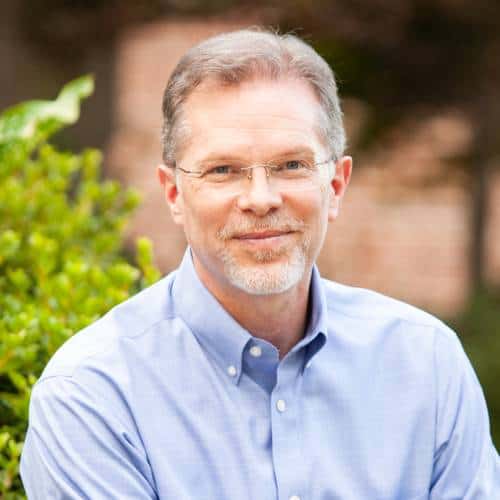
Ron Deal is Director of FamilyLife Blended®️ for FamilyLife®️ and President of Smart Stepfamilies™️. He is a family ministry consultant and conducts marriage and family seminars around the country; he specializes in marriage education and stepfamily enrichment. He is one of the most widely read authors on stepfamily living in the country.
Episode Transcript
FamilyLife Blended®
This content has been generated by an artificial intelligence language model. While we strive for accuracy and quality, please note that the information provided will most likely not be entirely error-free or up-to-date. We recommend independently verifying the content with the originally-released audio. This transcript is provided for your personal use and general information purposes only. References to conferences, resources, or other special promotions may be obsolete. We do not assume any responsibility or liability for the use or interpretation of this content.
Season 8, Episode 182: Blended and Blessed: Building Family Unity through the Beatitudes
Guest:Ines Franklin
Air Date: January 26, 2026
Ines (00:01):
There are so many things that I had to literally forget about, forget about. There were things that were said. There were situations that were painful and I had to actively choose to forget it. There are things I sometimes say to my husband when we’re upset at each other that I’m embarrassed about and I’m upset that I said them and they’re coming out of my own brokenness, my own past, my own wounds. I don’t mean what I just said, and so if he held onto every word I said when I was upset, we would not have a relationship today and vice versa.
Ron (00:41):
Welcome to the FamilyLife Blended podcast. I’m Ron Deal. We help blended families, and those who love them, pursue the relationships that matter most, and why do we do that? Well, because there’s great joy in loving God and loving others, and it makes the world a better place. We’re just one month into the new year and there’s all kinds of opportunities ahead to help you build your new self in King Jesus. Here’s just a few. The paperback edition of Nan and my book The Mindful Marriage, is now available this month. It came out a year ago in hardback, instantly became a bestseller, and now you can get a little bit cheaper soft cover edition if you want to give that to a friend. Dr. John Townsend said, “These principles can revolutionize marriages.” Shaunte Feldhahn said about this book, “These practical truths will help save and heal hurting marriages and make good ones great.”
(01:36):
The Mindful Marriage is available wherever you get your books, but hey, if you purchase from FamilyLife, then you help us out, so we’d appreciate you thinking about that. The show notes will get you connected to it.
This week, our next virtual Preparing to Blend training for leaders is available. That’s the premarital program that we have for pre-blended family couples. In February 2026, Nan and I are going to be part of the National Marriage Week, a virtual series, and we’ll be joining a few thousand people on the annual FamilyLife marriage cruise. By the way, wish you could join us. I’m pretty sure it’s sold out so you can try. But yeah, just start saving for the 2027 cruise.
And by the way, in February also, I’ll be doing a conference for blended family couples in Orange County, February 27 and 28, 2026. Would love for you to join me there if you’re anywhere near that neck of the woods.
(02:31):
In March, Nan and I are going to be speaking to a group of leaders in Chattanooga, and we’re going to be sharing our mindful marriage conference in Wisconsin. And of course, FamilyLife’s Blended’s annual Blended and Blessed livestream is going to be Saturday, April 18th this year live from Oklahoma City, but available worldwide. It’s a virtual event. You can be anywhere and participate. We want to get it on your calendar. Invite a friend and see if your church will host it for a bunch of people in your community. And get this, this year, 2026, the livestream is free. I know. Hard to believe, but it’s true. It’s free unless you’re in the live audience in Oklahoma City and we’re going to charge you for lunch, but that’s it. We’d love to have you there. You can learn about all of these great events that are coming up. Check the show notes. We’re going to get you connected.
Speaking of Blended and Blessed, here’s something ironic. My guest today has a new book with the same title as that virtual event. It’s just released and it’s called Blended and Blessed. The subtitle is Building Family Unity & Healing Through the Beatitudes. Ines Franklin is an author, speaker, podcaster, and bible teacher. She’s heavily involved in discipleship ministry and she’s my guest today. Welcome Ines.
Ines (03:51):
Thank you. Thank you for having me, Ron. It’s a joy to be here.
Ron (03:54):
Well, it’s great to have you. I’ve been looking forward to this for quite some time. Heard some really good things about you from our mutual friend, Dr. John Townsend.
Ines (04:02):
Me too.
Ron (04:02):
Yeah. I want to talk about your book, but let’s just back up a second. Set the stage for us. Tell us a little bit about your blended family.
Ines (04:10):
Yes, so Jim and I have five children together. We’ve been married 22 years. He came with two daughters who at the time were 20 and 21, and then I have a son who when we got together, he was 17 and then two daughters who again, when we got together, they were, lets see, about 10 and 6, and so we got married and it was a mess, a complete mess.
Ron (04:38):
Complete mess. What was the big surprise or the unexpected consequence of getting married for you?
Ines (04:45):
Well, first of all, the way our marriage started was not a good start, so you need to know we started in pain, and so it is one thing to come together as a blended family when everyone’s excited about the partnership, the marriage coming together. This wasn’t the case. We started out with our wedding day, Jim’s daughters came to the wedding, which was really beautiful, but they cried the whole time. They were so sad.
Ron (05:14):
I think I remember you saying 20 and 21. They were early.
Ines (05:16):
Yes.
Ron (05:17):
Yeah, and they cried the whole day. What was the sadness about?
Ines (05:20):
Well, Jim and I got together when his marriage fell apart, and it probably fell apart because of our relationship. It did, I shouldn’t say probably, let me use my proper words. It did fell apart because of us. We started our relationship in an affair. And as soon as we realized that we had emotions for each other, I was already a divorced woman and Jim decided to get divorced, and I hope that he could have gone and done that and then we could have gotten together, but that’s not what happened.
And so when we did decide to get married, it was not a good start. It was a very, very painful start, and so my children were kind of numb and confused because they had already gone through a divorce not too long before, and now we had all of this going on. My son, who was a teenager at the time, going through the typical things that teenagers go through, identity crises, who am I, what am I going to do with my life? All the things, the social issues that teenagers deal with. On top of that, he was dealing with a divorce and then my relationship with Jim. It was just—
Ron:
—a lot.
Ines:
We started really in a bad place, in a really, really difficult place. We have beautiful pictures of our wedding.
(06:42):
And we did want to get married, and we knew that we didn’t want to—started out living together and we decided, we actually started going to church. It was out of the blue. Jim said to me, “We should go to church.” At that time, I was almost 40 years old, and I thought “Maybe we should, we’ve made a mess.” And so we had started going and visiting churches. Every Sunday we’d visit a different church, and we were sure that a church would kick us out the minute they heard our story and how our relationship was started.
But we ended up landing at Mariners Church and the day we arrived at that church at 10:15 AM on October 20th, 2002, just in case you think I don’t—I remember that day like it was two minutes ago. The pastor taught about John chapter four, a woman who met Jesus at the well, who had been married multiple times before, and at the time was living with the man who was not her husband, and that was me. That was us, and we decided we wanted to get married instead of living together. But then of course that was very painful for our kids, especially for Jim’s daughters, that we immediately decided to get married and yeah, that’s how we started.
Ron (08:00):
Yeah, you started, I mean, we talk on this podcast a lot about just the hidden dynamics going on with children. The grief from the past meets the new family of the present, the bonding process, new rituals, new rules, new stepparent. How do they parent together? You parent me differently than my mom parents me, all that stuff is pretty normal. Then you add to it the layer of an affair. The timing wasn’t good. What is this doing? This is sort of like, “Wait a minute. You’re the person who symbolizes the end of my dad’s marriage to my mom.” I can just imagine how all those layers pile up and it makes it harder, and we don’t get to talk about that much on this podcast, so I hope you don’t mind, but we’re going to—
Ines:
I just brought a bomb.
Ron:
We’re going to bring it up. No, but I’m glad we’re going there because you are so not the exception to the rule, and for a lot of people, this is a common story for them or somebody they know and love and care about. If I could, you went to church and you were just sure they weren’t going to receive you. Sounds like shame talking, yes?
Ines (09:07):
Absolutely. Absolutely. And also appropriate conviction. I believe there was a sense of we knew that what we had done was wrong and that we had caused a lot of pain. There was an attempt to reconcile the relationship between Jim and his ex-wife, and that failed fairly quickly, and frankly, he was not wanting to do the work. He would admit today that that was an area where he really failed. So there was conviction for our sin, but also a great deal of shame and a belief honestly, that we were hopeless, that there was a pretty good chance that this marriage wouldn’t last. Statistically speaking, well, you know this.
Ron (09:54):
Yeah, the divorce rate’s a little higher.
Ines (09:56):
Yes, divorce rate is higher for second marriages or beyond that, but they’re even higher when they start out the way ours started. We already knew right up front that we were coming not only with the pain of our current circumstance, but even what led us there, what led us to make the decisions that we made. So we knew we had a lot of work to do, and truly the first two years were massive whitewater and a lot of pain. A lot of pain.
Ron (10:22):
Well, let me just say we love John 4 around here and John 8 and a whole bunch of other passages where we teach about that a lot because it’s such an important story for people who feel like you got to be perfect before you ever come to Jesus.
(10:36):
Which of course is the story of the entire Bible, not just the woman at the well in John 4, but everybody comes imperfect and every family is imperfect. And even the people I would say that made it into the Faith Hall of Fame in Hebrews 11, even those people had tons of imperfections. Just go back and read your Old Testament and you’ll find out how messed up they were as fathers, mothers, couples, parents. One generation after the next just seems to get worse and worse in a lot of the stories of God’s people. So it makes a lot of sense that Jesus meets another imperfect person. It’s so funny how we undo ourselves by thinking it’s our performance that makes us worthy of being His bride. But that story very specifically John, I know because he ends John 3 calling Jesus the bridegroom for the very first time. The bridegroom—what do bridegrooms need? A bride. Start John 4, and He goes to a well, and He meets this woman. She’s an unworthy bride, but Jesus says yes anyway to her, and that’s us, right?
Ines (11:46):
Yes, yes. I felt that when I heard the pastor share the story and then he also presented the gospel. I had never heard the gospel presented. I grew up in a Roman Catholic context when I was a little girl. My grandmother actually took me to church several times, quite a few times, and so I had a sense, but then I left the church as soon as we moved to California from Puerto Rico, and it was the first time I heard the gospel described. And so you’re hearing the story and then you’re hearing this good news that we are separated forever because of sin with our eternal heavenly Father and that chasm between us, it was the drawing of here we were on this side and there’s this deep ravine and God’s on the other side and there’s no way you can jump over. And our pastor used the analogy of, well, I live in California in Southern California and just outside of Southern California is an island called Catalina.
(12:42):
I don’t know, I think it’s a hundred miles or something. I’m not really sure how far it, maybe even less, might be less than that. But he said, you can’t jump from southern California to Catalina. No one can. Mother Teresa could try, and she’s only going to get so far if her goodness is going to get her there. And I remember hearing that story going, “Well, I’m not even going to get off the ground compared to Mother Teresa.” He says, you need Jesus. And then they put the cross in that in between spot, and it is Jesus who makes it possible for us to have a relationship with God. And that was the first time I heard that. I still have the outline of that message. I didn’t give my life to Jesus that day. Actually, they didn’t do an, I believe, invitation or anything like that, but we did all walk out. It was Jim, myself, and my two daughters. One was in middle school; one was in fourth grade. They walked out of their spaces. We came out of the church, and we were in this habit of doing thumbs up or thumbs down. And every Sunday we had a different combination of that. With that Sunday, all of us were thumbs up.
(13:47):
And so we kept coming. And it was the following year that after starting to read the Bible, hearing more about this beautiful story because truly, because of shame, as you said, even though I heard that, I thought, “Sure, that’s for other people, not like—I’ve gone too far. I’ve done too much. That beautiful love and grace is not for people like me.” And so it took me a time to understand that that was also for me and for Jim, and for all of us truly.
Ron (14:26):
Your book, it’s rooted in the Beatitudes, speaking of good news in Jesus and one of His major sermons recorded in Matthew 7, 5, 6, and 7. There’s character values in there that transcend family structure, move past pain and mistakes from the past. So I think I know the answer to the question, but I want to ask you anyway, why did you want to root this book for blended families in a Sermon on the Mount?
Ines (14:55):
Well, we learned early and like we shared earlier, we have a mutual friend, Dr. John Townsend, who early on became a friend.
(15:03):
We met him at the church and counseled us. We learned very early on that Jesus had to be at the center of this relationship. That we had built our prior relationships, obviously in a different foundation. So that’s the journey we walked on, having Jesus be the absolute authority in our home, in our relationship, and in healing our family. And so I wanted this book, which is a book where I talk about this journey of being a blended family, to be rooted in Jesus himself to the whole point of the book is Jesus has to be the foundation of the relationship of the family, and you have to look to him. And I wanted his words and I felt like, what can I take of all the things that Jesus said to kind of prove my point that he has to be at the center of our family and the beatitudes, which I believe are a summary of all his teaching really, not just his teaching but his way of living.
(16:07):
I felt like they were very apropos for that. And frankly, I was on a walk, and I was thinking about this book. I had already written several outlines. I was thinking about what I was going to talk about and I didn’t have a frame, and I was praying and asking the Lord, who am I writing this for? What is it that you want me to tell them? I’m just praying the whole walk. And then the Beatitudes just came to mind, and then I literally stopped. I know exactly where I stopped. I opened up my phone and opened up the Bible app, read the Beatitudes, and I started sobbing because I knew this was it. This is what I wanted to use as a foundation for the book.
Ron (16:47):
I’d actually grabbed a section. You were speaking to that question of, well, can blended families still be a part of God’s design? Can they still reflect his righteousness? I want to read you some of your words and then I’d love for you to just comment on it because I know I’ve run into so many people, been doing stepfamily ministry for 32, 33 years at this point, and even people who have long-term happy blended family situations have this low level question hanging in their heart. Sometimes it is pressing right in front of them, and they can’t get away from it at all. But sometimes even the people who are doing well are still sort of haunted by this notion that maybe, maybe they can’t have God’s full blessing because of their past, because of some story that they can’t quite get away from.
So let me just read you what you wrote. You say “In blended families, it’s natural for us to crave love, connection, and peace, but deeper still is our need for righteousness, for our homes to be built on what is just, right, and true. We should not be ashamed of this longing as it reflects God’s design. We were made to long for God’s righteousness because it makes us whole. It repairs what is broken and creates the conditions for peace to exist. Peace and righteousness are partners in God’s redemptive plan and blended families are a part of it.”
Ines (18:13):
Yes, yes.
Ron (18:15):
What makes that so important for people to embrace?
Ines (18:18):
Because so often we feel, I know I felt this, that as a blended family, we were second class, we were not part of God’s design. God had a very specific design in Genesis 1.
(18:30):
And we messed it up, and now we are in this family, even if someone enters a blended family by marriage without the black water that we had or the story that we have, and there’s always this sense like, “Oh, we’re less than. We’re not what God had in mind,” and I want to dispel that with this book. I’m going to show not only the blended families can be absolutely blessed by God, but they actually reveal the beautiful redemptive plan that God himself is about blended families. As I studied and I looked at so many families in the Bible that are actually blended, and the church itself as I reflected the church itself is a universal blended family of people from all over put together into this sort of community where we are supposed to be brothers and sisters.
(19:19):
And so it’s like, no, yes, no doubt. God had a plan with family, and that was in Genesis 1. It was broken by sin, but the beauty is that God doesn’t leave it that way, that God wants to redeem and restore and transform, and that’s the story of the Bible, and that includes us as blended families and we get to shine that we get to show people look at God can do when we give him our mess. He makes like that song beautiful things out of us.
Ron (19:56):
Yeah. Oh, and it’s so very important. Everybody, every once in a while, looks in the mirror and goes, “I’m so unworthy of God’s grace.” And that’s actually a truthful thing to say we are. And the crazy thing is when we rest in that we have the audacity to embrace God’s grace, as I like to say, that we are actually empowered to live. We don’t have to live in fear anymore. That’s the whole point of that grace. And so as long as we’re still holding onto performance, then we still feel guilty and unworthy.
(20:28):
As soon as we let that go and recognize he’s doing the work and we’re okay, then we’re just like that woman at the well who not only has her life transformed, but she becomes an evangelist for anybody else who’s still thinking they’ve got to hide their story and pretend, but that’s not necessarily the way it gets. So I’m curious, let’s go back to you go to church, you guys, you’re starting your family, you’re starting your spiritual journey together. You realize there’s some things you got to change. Was it sort of just an uphill climb in terms of the trajectory of your spiritual growth with God? Or did you guys have ups and downs and ins and outs? How did that roll?
Ines (21:05):
Yes, spaghetti—
Ron (21:09):
All over the place.
Ines (21:10):
—was not a straight up to the right kind of a chart at all. It was, oh, what a journey.
(21:17):
And this is so important because I think we can be so impatient. We were impatient with ourselves, we were impatient with our kids, with our loved ones, in sort of a desire. It’s oftentimes when you start a family, no matter the circumstances of starting a family, there’s so much joy and excitement and you want it to work a certain way. And I think we had to come to terms with that’s not how it’s going to be. We took steps forward and step backwards. We got stagnated at times and it felt like we weren’t moving forward anymore, and suddenly we started moving forward. And so it was a journey of a lot of movement overall. If you look at the chart further away, it does look like a straight up chart, especially now when you think 22 years later, really 24, because our relationship started before we got married.
(22:07):
You look at that chart, you think, oh, that was a straight up move. But if you were in the moment, you would see all these different situations. And I try to tell some of the stories in the book. It’s not a memoir. It’s not meant to just be stories. I do want to—it’s kind of like a devotional in a sense. It’s a short book. Each chapter is one of the Beatitudes. But I do tell a story. I talk about the Beatitude. I talk about how it connects to the blended family journey. And in those stories, you can see there are days, times where we were doing great and then there weren’t. I remember one time it got so bad, I called a friend in tears thinking, “Oh, I’ve had it all wrong. I thought we were so much further ahead than we were. I’ve been fooling myself. This is never going to be, God’s never going to redeem this family.” And she had to stop me and said, “Wait, wait, wait, wait. Ines, yes, you perhaps weren’t where you thought you were. And yes, you might be a few steps further back because of the situation, but you’re not where you started.”
(23:10):
“You’re probably never going back to where you started.” And she was right. Every time we went backwards, we never went back to square one. And by the way, some situations felt like we went back to negative 10. It didn’t feel like square one. It felt like even worse. But she was right that there was so much we had already built. And I think in my own spiritual journey, I would say the same. I think in my walk with Jesus, there were many times where I felt like I was going forward. I started reading the Bible and understanding who God is and who I am because of him. But it took seven years, seven years of my journey with Jesus to let go of shame. It was so hard. I could accept all sorts of things, but I still had this self-condemnation and this sense of shame that I could not be used by God in certain ways because of the story that I had. That took longer to recover from.
Ron (24:05):
I think self-reliance in us is so ingrained, work harder, do harder, perform better, finally earn it. It is so hard to get out of us because it’s just deep and we just think that we got to do that with God.
(24:20):
And we work and we work at it. Wow. So many questions running through my head. That season of shame where you had to stop, I’m so glad you shared that. Thanks for doing so. People who listen to this podcast and are familiar with some of my other writings, will know. I think they’re thinking crockpot right now. We teach, you cook a stepfamily with a crockpot and not with a blender, not with a microwave. Nothing’s fast. It goes very, very slow. And every ingredient has to warm up on its own time. That patience factor you were talking about, I think was coming out there. As was the, Hey, you were feeling horrible about something that day you talked to your friend and she helped you remember that no, wait a minute. You’ve made progress. You’re moving forward. Not all is lost. I think a lot of—react to this.
(25:06):
I think a lot of people have such high standard and hopes—that’s the word—have high hopes for all the connections in their family. They want everybody to feel loved and connected and belonging, and nobody feels slighted or different or anything. And when that doesn’t happen as quickly as they would like for it to happen, then they feel like they’re a complete failure. And the truth is no, you’re in process. You have made some gains, some things are going well, but there’s other things still to be worked on. Why is that? Do you agree with that perspective? Could you relate to that? And why is it so important to hold onto that?
Ines (25:40):
In a way I think it’s connected to that hunger and thirst for righteousness that we all have. We all want that, which is good. And so of course we want our family to be united, to be healed, for everyone to get along, for it to be beautiful. And that’s a good thing. There’s nothing wrong with that, but I think we often forget we live in a fallen world and we have zero control over other people and their decisions and their choices and their actions. And so God who has all the control still chose to give us free will and we made a mess. And so it’s almost a little bit of a sense of we forget it’s another way of earning or perhaps pride of believing that we can be the ones to build the perfect family.
Ron (26:27):
That’s it.
Ines (26:28):
And that we are going to come in and we do this, this and that. We read the books, we’ve got all the answers, and this family is going to be wonderful. And I have to say, I am guilty of this very much, and every so often I get re-snapped out of it. So my own pride gets in the way in that where we think we’re doing really well. And I think, see, I arrived and no, I quickly get recorrected. And that’s so important. I think that’s just a journey of our spiritual maturity and growth that we’re often, as soon as we think we have it together, it means we have lost sight of how much we need God every single day, every minute. And we need it in the family, in a blended family especially I believe every day.
Ron (27:13):
Of course, there’s so much between your kids and his, five kids in total, as I recall. By the way, got any grandchildren at this point?
Ines (27:20):
Yes, all five are married and we have 10 grandchildren with two more on the way.
Ron (27:25):
Wow.
Ines (27:25):
So I’m very excited about that. It’s a lot of people. We have steps and halves. We have adopted children. So I know you don’t like blenders and I get it, but we decided long ago to give ourselves the term smoothie family.
Ron (27:44):
No, that’s great.
Ines (27:46):
It’s a chunky smoothie. There’s a lot of chunks in this smoothie, but we call ourselves a smoothie family because it’s like a whole separate social category because we have so many different types of social categories in our family. But yes, it’s a big family.
Ron (28:10):
So I know there’s so much we could unpack. Maybe with 20 plus years in your journey, look back and just maybe share a story or two about the kids, two that were crying on the day of the wedding, your three that were just really confused, I think is the word you used and having to adjust to a lot of things. Looking back over the last 20 years, what were some things that were helpful? What changed? What needed to happen to just help the kids move forward?
Ines (28:39):
Well, this is going to make me cry because Jim and I are so humbled and so grateful to our children. Really, each of them have done their part in trying to make this family what it is today. There’s no way our family could be what it is, just because Jim and I decided this is what we wanted it to be. And for that matter, even if God is the one who wanted it to be a certain way, because again, God gives us free will and we get to choose are we going to participate or not? Are we going to contribute or are we going to create a bigger mess? And sometimes there are people who just refuse to participate, and we feel so blessed that our children chose. Now not always perfectly and not—some of them for a long time didn’t so we had many of—
(29:26):
Along this journey we had seasons where one didn’t or two didn’t and all of that. But still overall in the big picture, I’m so grateful because they all did their part. Even that picture of our wedding that Jim’s daughters chose to come and stand by their dad on the day he got married was huge. What a statement they made to say, “Dad, we are upset about this. This is not what we want, but we care about you. This is an important day to you where we’re going to stand by you.” Unbelievable. So much grace and poise.
Now, they didn’t take a picture with me and they couldn’t; in their heart they couldn’t. And I understand that. It was painful for me at the time, but I understand that now better than I used to back then, because back then I was so self-absorbed and thinking about me and what I wasn’t getting and not understanding what it would be like for them.
(30:25):
So that’s a big part of what I’ve seen in our family that has helped us. And I also see how God has guided us through this whole process. There were so many times where, or honestly, Jesus did miracles in our family and some miracles through tragedy. My husband was in an ATV accident. I’m thinking this was 10, 11 years into our marriage, and it was a major accident. He had to have multiple surgeries, and it was in Reno, so it wasn’t even where we lived. And Jim’s daughters flew over to be with me and with him. And that experience gave them a sight of me as a wife and as Jim’s partner in a way that they needed to see. And after that, 11 years into our marriage, at least 10, was when they first told me that they love me. It took that long. They showed me that they loved me, but they finally got to say it, but it came through tragedy. So sometimes these things happen in a way that you just least expect. I would’ve never expected that out of that situation.
Ron (31:38):
I’m thinking about, oh goodness. One of the things we want people listening or watching this podcast to grab hold of is just that, hope. That what you’re doing is paying off even if it’s not paid off to the degree you wish it had, or your definition of good is not necessarily what you’re experiencing, but you’re moving forward and you’ve got to keep trusting the process. And sometimes it takes the unexpected to catapult a relationship forward in some way. Hope it’s not tragedy, but sometimes it’s hardship because that does bring people together. The point is, if you give up because it hasn’t happened as quickly as you want or in the manner that you want, then you never get there.
Ines (32:26):
Yes. Yeah. One of those stories I could share was, if you don’t mind, is Jim’s oldest for a year would not talk to him or see him.
(32:35):
And early in our relationship, other than the wedding—
Ron:
Very painful.
Ines:
—very painful, other than the wedding. And he was angry at her and I was hurt. It was just so much. But I remember telling him multiple times, “This is your daughter. You can’t abandon your daughter. You have to pursue your daughter.” “But she doesn’t want to talk to me.” “It doesn’t matter. You have to pursue your daughter.” For me, perhaps that came because I grew up without a father and my father abandoned me. And so I couldn’t compute a situation where a father should ever leave their child. And so I kept pushing him to pursue her. He didn’t have to take me.
(33:27):
That wasn’t the point. To whatever extent she was willing to meet with him, I encouraged him to. And so he kept trying. And I look back at that and I’m so grateful that God gave me the wisdom at the time, and even just the willingness and desire to help Jim rebuild his relationship with his daughter. I know that’s not a common thing. A lot of times people get mad with their kids or frustrated and they, “Okay, fine, then I’ll talk to you when you’re ready.” And that is not good. I think we pushed through that and I’m very grateful we did. And I encourage people all the time, maybe my story caused me to have that posture, but I think that’s an important posture, no matter the circumstances; that we should pursue our kids when they get hurt to the extent that we can. At least do our part.
Ron (34:21):
Absolutely. Absolutely. Make yourself available and continue to let them know that—
Ines (34:26):
You love them.
Ron (34:27):
—you love them, and you want to keep that relationship.
I want to jump into the book a little bit. You have a section called Pathways to Flourishing. You talk about so much in there, I don’t know, pick one. You talk about the attributes of kindness and resilience and identity and how important those are—
Ines (34:44):
Yes.
Ron (34:45):
—for blended families. Yeah, you care to comment on one or more of those.
Ines (34:48):
Sure. So each chapter of the book is a Beatitude. And so the first chapter is the “Blessed are the poor in spirit.” So this idea that we need, every one of us has some level of dysfunction in our family, and we need to understand how much we need God to help us with that, that our family is no different than any other family. Nuclear families have their issues too. We’re not alone. We’re not special. We’re not unique. The reality is we’re humans. We’re broken and we need to accept that we need Jesus to come in and help us. And that foundation then takes us into the other Beatitudes, which is where we get to extend mercy and patience and grace and forgiveness and seek peacemaking within the relationship. All of these come because we are trusting and asking Jesus to be the foundation of that posture.
(35:37):
So every chapter after that is about this idea of creating kind of like a heart posture in our family to extend kindness even if the kindness is not coming back at us. Now, obviously, and I’m very clear about this in the book, there is no place to be in an abusive relationship. When either a spouse or a child behaves abusively, we need to be responsible and create proper boundaries, not just for ourselves and our wellbeing, for the wellbeing of other children, but also for the wellbeing of the person who perhaps is stuck in some sort of abusive pattern. So abuse is not what I’m arguing for when I’m talking about forgiving and being kind and looking for peacemaking. To the extent that the other person is not being abusive we should seek reconciliation. We should seek to show kindness.
And again, it doesn’t have to be sent back to us. And I can’t tell you how many times I did things that were not returned, maybe weren’t even noticed, but because Jesus told me to do it, I did it. I’m glad I did it, even though again, I don’t know the fruit of that. Maybe I won’t know until I’m before the Lord, but I know that’s what He wanted me to do, and it was good for me. And I think in the big picture, it’s good for us and our family.
Ron (36:59):
Well, I guess I would suggest maybe you do know the fruit of that. You didn’t feel it instantly. The fruit didn’t come in, but after 20 years you can see the fruit of that.
Ines (37:09):
I see so much, yes, I do.
Ron (37:10):
Absolutely. And the reason that bears importantly saying out loud is because I think people, it’s so easy to get discouraged. How long did you have to be kind before your stepdaughters, for example, were kind back to you? They weren’t even—one of them wasn’t even talking to their dad, let alone you, or moving toward you. It’s so easy at that point when you’re self-absorbed to just completely lose all motivation, to be kind, to be decent. What worked for you? What helped you hold on and keep going? Other than because Jesus said so or maybe that was it.
Ines (37:47):
No, no. I think understanding that I’m a rescued animal myself, that I’m a wretched soul, that Jesus had to come and die and rescue me from—
Ron (37:59):
So the humility of that.
Ines (37:59):
Yeah, understanding. In fact, that’s one of the Beatitudes, right. Blessed are the meek, sometimes. Blessed are the humble, is understanding like, look, I make mistakes. I do things poorly. I say the wrong thing. I spew out something that’s super hurtful. I do all those things. And so understanding that I need God’s grace and that I received it. This is the part that would constantly take me back to a place. I have received the grace I don’t deserve. And so from there, I can give grace to behaviors that maybe I had right to be upset. I have “the right” to hold a grudge, whatever. There’s no room for that when you are grounded in the grace of Jesus. There’s so many things that I had to literally forget about. Forget about. There were things that were said. There were situations that were painful, and I had to actively choose to forget it because that behavior was just, like I said, there are things I sometimes say to my husband when we’re upset at each other that I’m embarrassed about and I’m upset that I said them and they’re coming out of my own brokenness, my own past, my own wounds.
(39:14):
I don’t mean that. I don’t mean what I just said. And so if he held onto every word I said when I was upset, we would not have a relationship today and vice versa.
Ron (39:24):
Good point.
Ines (39:25):
Sometimes we say things to each other that are very painful, and yes, words are hard to recover from. I’m not minimizing that, but I chose to actively pour grace over that versus holding onto judgment, holding onto like, “I’m going to remember that,” “I’m going to pay you back,” or “I’m going to hold”— Every time I would feel that I would go back to Jesus and say, “Jesus, you forgave me for the most horrible acts. Help me learn to forgive the way that you forgive.” And yeah.
Ron (39:55):
That’s that Colossians 3, forgive as you have been forgiven stuff. Right? And the Lord’s prayers as a matter of fact. And that’s so important and it’s so very hard. Let’s just acknowledge for the listener and the viewer that is so hard when you pour out, give, serve, try to love, and you just get nothing back, or maybe you get burning coals thrown on you, whatever it is, it’s so hard to stay in there and keep going. Again, not talking about abuse, we’re not talking about extremes here, but just that everyday rejection that people often experience when they’re trying to build step relationships. Hanging on to that humility and that posture of recognizing God’s grace and what He’s done for all of us as your motivation to then turn around and go the extra mile.
Ines (40:47):
Yes.
Ron (40:48):
Speaking of the Sermon on the Mount, wow.
Ines (40:49):
Which again, this is where the Beatitudes are so amazing. So every one of them starts with this word blessed or blessed. And I did some deep dive into what that word means, and it sometimes it’s translated happy. But Jonathan Pennington, he describes it as flourishing. And in the beatitudes, they’re not about do this and therefore you get this. It’s not a tit for tat. It’s more like a description of the condition of those who are in that place. So those who are humble, there is a flourishing and a happiness and a blessed that occurs out of that very state, which then puts me in a place where I want to be humble. And I’m not looking to be humble to earn points or to make someone else behave a certain way, but I want to experience that flourishing, that happiness. And God wants us to be happy.
(41:43):
And really, He does. That’s why the Beatitudes are here to tell us God wants us to be happy, but it is very different than what the world offers us. And so this idea of like, well, if I choose humility, if I choose grace, if I choose mercy, if I choose purity of heart, honesty, then I will experience a flourishing and a blessing and a happiness I can’t get anywhere else. And even in the most difficult situation when someone says something, they’re like, “Oh, that hurt, that stung.” I now look at those situations and realize that, oh, that’s an opportunity for me to go to Jesus and say, Jesus, what’s that wound all about? What’s that pain all about? What do I need to heal from? Why did that affect me the way it did? What is my appropriate response to this? And that process of doing that has made such a difference for me, just me.
(42:39):
Jim does it too, but it’s made a big difference for how do I deal with when these situations come? Because they’re very painful, but God doesn’t waste anything. He uses every situation to make us more and more into the image of his son. Roman says, God works out all things for the good of those who love him. People stop there. They don’t read the next verse, which talks about what is the one thing God wants to do. He wants to make us like Jesus. And so every opportunity that I find, every opportunity in our family, that gets hard, listen to how I say it. It’s every opportunity because I have learned, even it just came out of my mouth the way I think of it now. We’re just different. 22 years has made a difference where I can look at these situations and say, “Here’s another opportunity to grow Christ-like,” like “Jesus, how would you handle this?”
Ron (43:32):
Yes. And to your point, everything we read in the Sermon on the Mount, Jesus actually did. I mean, He even went that second mile. He even let him slap him on the other cheek. All of those things He did first and gave us an example of what it is to try to do that. This has been so good. Hey, so you’re 20 years in. Looking back, is there something you wish you had known sooner about blended family living?
Ines (44:01):
I wish I would’ve known you, Ron, because as I was writing this book and reading your books, I thought, oh, this would’ve been so helpful early on. So to all your followers, if you haven’t read your books, you haven’t read your books. Yes. I mean, what you do is golden. And it’s so powerful. And I am a little bit upset with Dr. John Townsend because he did not tell me about you until I was writing this book. And I did wish, I think it would’ve been a wonderful resource for me, for us and our family. And of course, we’ve gotten here and we’ve learned a lot, thanks to Jesus, but I know you would’ve given us some great tips along the way that could have helped a lot. So yeah.
Ron (44:42):
Wow. Well, thank you for that. I appreciate it. Yay God. And yeah, we’ll have to talk to John.
Ines (44:47):
Exactly. Believe me, I’m going to be your number one fan now. I’m telling people about your books.
Ron (44:54):
Well, thank you, and I am so glad to get to know you and about your ministry and introduce you to our audience. There’s something really good about what you’re doing, and this book is really great. I was happy to endorse it. Ines, thank you so much for being with me today.
Ines (45:07):
Thank you. God bless you.
Ron (45:10):
If you want to learn more about Ines and her ministry, check the show notes. Wow. We’re going to get you connected to all that she’s doing and pick up a copy of her new book.
If you don’t know, FamilyLife is a donor supported ministry and our division FamilyLife Blended wouldn’t exist without you. So if our ministry has blessed you, please consider making a one-time donation. It’s tax deductible. Or maybe a monthly one. And if you don’t mind, share this episode with a friend or a ministry leader so they can be blessed too.
Don’t forget to put Blended and Blessed our free worldwide live stream on your calendar Saturday, April 18th. You can go to BlendedandBlessed.com to learn more or just look in the show notes.
Okay, next time I’m talking with two widowed single parents who found love in each other and combined their nine children. That’s right, nine kiddos. That’s Justin and Kelly Walker, next time on FamilyLife Blended.
I’m Ron Deal. Thanks for listening or watching. And thank you to our production team and donors who make this podcast possible.
FamilyLife Blended is part of the FamilyLife Podcast Network. Helping you pursue the relationships that matter most.
We are so happy to provide these transcripts to you. However, there is a cost to produce them for our website. If you’ve benefited from the broadcast transcripts, would you consider donating today to help defray the costs?
Copyright © 2025 FamilyLife. All rights reserved.
www.FamilyLife.com