

Grandparenting when Kids Walk Away from Faith: Dr. Crawford Lorrits & Larry Fowler of the Legacy Coalition
Grandparents and parents face heartbreak when kids walk away from faith—or when rules block spiritual talks. Dr. Crawford Loritts and Larry Fowler (Legacy Coalition) show how leaning in with persistent love, humility, gratitude, and creative prayer keeps relational doors open. Through stories, apologies, and benchmarked traditions, they reveal how small, consistent faith-filled actions can shape family legacies—even amid fractures, resistance, and messiness.


Show Notes
- Legacy Coalition is a ministry equipping Christian grandparents. Go to
legacycoalition.com - The Legacy Grandparenting Summit is an annual conference for Christian grandparents
legacycoalition.com/summit - Save the date! Blended & Blessed® is happening April 18, 2026. Find details at blendedandblessed.com
- Thanks to the Christian Standard Bible for sponsoring this episode. Learn more at CSBible.com.
- Follow us on all social platforms: Facebook | Instagram | YouTube
- Find resources from our podcast at shop.familylife.com.
- Download FamilyLife's app!
- Help others find FamilyLife. Leave a review on Apple Podcast or Spotify.
- Check out all the FamilyLife's podcasts on the FamilyLife Podcast Network
Looking for a way to keep going?
These six conversations are just a glimpse into the type of conversations prompted by our new marriage study, Art of Marriage, currently 25% off through August 31.
If you’ve been craving more—more connection, more understanding, more joy together—Art of Marriage is a powerful next step. This six-session, video-based study dives into the core of how to love our spouse the way God loves us: how to have an unwavering love no matter the challenge, a love full of strength and resiliency, a love that is selfless, a love that forgives because of the grace He has shown us, a love so intimate that you feel fully known and seen, and a love that is a representation of Christ just in how others see you love each other.
You can walk through it with friends, a small group, host an event at your church, or go through it with just the two of you. Learn more or preview session one at ArtofMarriage.com
About the Guest

Crawford Loritts
Crawford Loritts (B.S., D.Th., Philadelphia Biblical University; D.Div., Biola University) was the senior pastor of Fellowship Bible Church in Roswell, Georgia. He has served as a national evangelist with the American Missionary Fellowship and the Urban Evangelistic Mission, and as Associate Director of Campus Crusade for Christ. He co-founded Oak Cliff Bible Fellowship in Dallas, Texas. He is a frequent speaker for professional sports teams, including three Super Bowls and the NCAA Final Four Chapel, and has spoken at conferences, churches, conventions and evangelistic outreaches throughout Europe, Africa, Asia, the Caribbean and the United States. He is also the host of Living A Legacy, a daily radio program.
Dr. Loritts has written numerous articles and is the author of six books, including Leadership as an Identity, Lessons from a Life Coach, and For a Time We Cannot See. He co-authored Developing Character in Your Child with his wife, Karen.
Dr. Loritts and his wife have four grown children and live in the Atlanta, Georgia area. They also have 11 grandchildren.
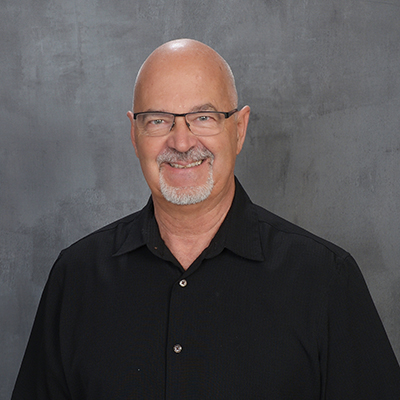
Larry Fowler
Larry Fowler is the founder of Legacy Coalition, a national ministry focused on equipping Christian grandparents to fulfill their biblical role of impacting grandchildren. He has nearly 50 years of pursuing his calling to children’s ministry, beginning as a youth pastor, then missionary, then international trainer (in 47 different countries), and senior executive with Awana Clubs International. He has years of experience writing children’s ministry curriculum. He is the author of the best-selling books, Rock Solid Kids and Raising a Modern-Day Joseph, as well as several other books on children’s ministry, parenting, and grandparenting. He has been featured in parenting videos by Focus on the Family and is a frequent main-stage and breakout speaker at conferences and seminars. His latest book is Overcoming Grandparenting Barriers.
In 2012, he was the recipient of the Legacy Award from the International Network of Children’s Ministry, recognizing him for his lifelong impact upon children’s ministry in America. That same year, Larry felt God’s call to a new focus—grandparenting—and he and his wife Diane moved to Riverside, California to be closer to his son and daughter-in-law as they started their family.
In 2016, Larry followed his new calling, and led the launch of the Legacy Coalition. This launch was the catalyst for a national grandparenting movement. This movement calls Christian grandparents to become intentional in perpetuating faith in their families and is characterized by grandparents first realizing their biblical role and their potential for spiritual influence, and then becoming purposeful in their interactions with their grandchildren.
Now, its 70-plus staff members and key volunteers serve local churches and equip grandparents through podcasts, webinars, blogs, printed materials, and other resources. They also conduct the only national conference on Christian grandparenting, the Legacy Grandparenting Summit.
Larry and Diane have two grown children, seven grandchildren, and live in Riverside, California.
Episode Transcript
FamilyLife Today® with Dave and Ann Wilson – Web Version Transcript
This content has been generated by an artificial intelligence language model. While we strive for accuracy and quality, please note that the information provided will most likely not be entirely error-free or up-to-date. We recommend independently verifying the content with the originally-released audio. This transcript is provided for your personal use and general information purposes only. References to conferences, resources, or other special promotions may be obsolete. We do not assume any responsibility or liability for the use or interpretation of this content.
Grandparenting when Kids Walk Away from Faith
Guests:Dr. Crawford Loritts and Larry Fowler
From the series:Grandparenting (Day 2 of 2)
Air date:April 10, 2026
Crawford (00:04):
If you have integrity without humility, it sets you up for self-righteousness, that you just do everything right. The truth of the matter is I think one of the greatest things we can teach our children and our grandchildren is how to be grateful.
Ann (00:25):
Welcome to FamilyLife Today, where we want to help you pursue the relationships that matter most. I’m Ann Wilson.
Dave (00:32):
And I’m Dave Wilson, and you can find us at FamilyLifeToday.com. This is FamilyLife Today.
We got Dr. Crawford Loritts in the house and Larry Fowler talking about legacy and grandparenting, and we’re going to talk about a lot of stuff.
Ann (00:54):
And parenting. We’re going to jump into it. And even what do you do if you can’t talk to your grandkids about Jesus because we’re not allowed to?
Dave (01:05):
That’s a tough one.
Now, what do you say to the parents or grandparents who have tried to do it right, and now they’re looking at some fracture in their legacy; kids, grandkids walking away from the faith? I mean, there’s a lot of struggle going on. On the Love Like You Mean It® cruise, a few years ago, Bob Lepine and Ann and I did a workshop and said, “Adult parents of adult kids, come, let’s talk.” And then we did an open mic. Hey, any question you want to ask. It was tragedy.
Ann:
Tragical.
Dave:
Just weeping of, I did everything right. And so what do you say?
Ann (01:46):
And even those stories of saying, “I’m a grandparent. I want to impact my grandkids spiritually and I’m not allowed to.”
Larry (01:53):
Yes. It’s heartbreaking and it’s also extremely common. Most all families are messy. And if they’re—
Dave (02:03):
Most all, I think all.
Larry (02:05):
And if they’re not—if somebody out there doesn’t think they have a messy family, just wait a generation and it’ll probably happen.
Dave:
Yeah.
Ann (02:13):
Or have another kid.
Larry (02:14):
So that’s part of it, just to realize, number one, realize that you’re not alone. God has His own timing for things, and He can still bring them back. We want it to happen quickly, but sometimes that’s not God’s timing. But there’s a lot that grandparents can do that are in that situation.
Ann (02:33):
Yeah. Let’s talk about some of those. What are the things we can do as grandparents?
Larry (02:37):
Let me start with one and we’ll go to Crawford for one. I’m sure he has a lot too. But one of the things that I think that Christian grandparents make a mistake of doing is they lean out when they really need to lean in. If they have a son or daughter or a grandchild that is making bad decisions, that’s the time to lean into the relationship, love on them unconditionally, love them more, communicate with them more, talk with them more. Don’t pull back and pull away because you’re offended or even horrified by the bad decisions that they make. You need to represent God to them. And God leans in with love toward us, through the person of Jesus Christ and the work of the Holy Spirit. We need to represent Him well in doing that.
Dave (03:28):
I mean, what would lean in look like?
Ann (03:29):
Yeah. Let me give an example of these and then you guys kind of show us what it looks like to lean in. When we were on that cruise, one person came up and said, “My daughter, she’s practicing witchcraft.” Another parent came up crying saying, “My son has married a man.” So if they’re not leaning back, how do they lean into those relationships?
Crawford (03:49):
I think it’s connecting with their hearts and making sure that you are available to them. You stay engaged with them. It doesn’t mean that you preach at them. It doesn’t mean that you articulate how wrong they are. They know how you feel. It’s calling them. It’s listening to them. It’s checking in on them. It’s doing the things that you know that they like and making yourself available to them. The worst thing you can do is to reject them. And somehow or another, we have this crazy sense that if, “Well, they’re living in sin, I need to …” Well, yeah, they are living in sin maybe. Does God walk away from them? Your presence needs to be felt.
And the other thing is to understand you got to be careful as Christians. We quote Proverbs and these other verses as promises that you know, train up a child away should go and when he’s old, he will not depart from it.
(04:47):
Well, my problem with that is that number one, is that a promise or a proverb?
(04:51):
It’s a proverb, meaning that it’s likely if you do that. But even a closer examination of that verse is that train up a child according to their proclivities—
Ann:
Their bent.
Crawford:
—and they won’t walk away. And there’s no guarantee. And you got to understand that you can’t be your child’s will or your grandchild’s will. No one can. But what you can do is continue to believe God, love them, pray for them, pray for open doors to enhance the communication, but we need to love them in such a way that they’re delightfully confused. They’re delightfully confused. They cannot argue with our sincere commitment to them. You know that I care about you. You know that I love you. You know that I’m always there for you. And no matter what you do, that’s never, ever, ever going to change. And that degree of throwing them off of their equilibrium by you continuing to press into them is powerful.
(05:51):
But that’s what God does to us. He keeps pursuing us. He keeps loving us. That’s what you have to do.
And then you demonstrate it. And I think the key to grandparenting too is—now there’s all kinds of issues involved. And I think Larry and others have talked really articulately about this, that there are times in which your children will block you just because of where they are or may not be spiritually and this kind of thing. But you got to go with what you can get.
Ann (06:19):
Yeah.
Crawford (06:19):
You got to go with what you can get. And as early as possible, connect with their hearts and you don’t withdraw more than you deposit and you start traditions with them. When our grandsons, they reach 13 years old, we have a ceremony with them. I give them a Bible that I’ve preached through and had my devotions in, and I write in the fly leaf of the Bible, the family tree going back to Peter, and we have a celebration with them. I want to benchmark their souls. Karen does something similar with our granddaughters. I think having traditions and these kinds of things, it gets back to making it normal. This is who we are. And yet keeping the door open because when they wander, not everyone’s going to say yes to Jesus. When they wander away, they know that this is stability over here.
Dave (07:12):
Yeah.
Crawford (07:13):
This is love. This is grace.
Dave (07:14):
I have a foundation I can return to.
Crawford (07:16):
I can come back.
Dave (07:17):
Yeah.
Larry:
I have a story. What do grandparents do when they are told they can’t talk about God? I had a lady stand up in a class that I was teaching early on in our legacy coalition ministry. And she said, “Mr. Fowler, this sounds really good, but my son has said I can see my granddaughter or I can talk to her about God, but I can never do both because the minute that I mentioned God to my granddaughter, I’ll never be allowed to see her again.” Now this is a lady that’s a strong believer. And of course, she would want to talk to her granddaughter about God, right? But she respected what her son said and didn’t mention God, but she also leaned into the relationship. I heard what happened after she said that to me. It was in a church that I was familiar with, and I found out that not long after that, she leaned in by saying, “I’m going to take this granddaughter on a week-long trip to New York City.” Now this is from California to New York.
(08:18):
So that’s leaning into the relationship all alone, week together. They are sightseeing and they get in, take a cab to go from one place to another. And after they get out of a cab and the cab drives away, the daughter goes, the granddaughter goes, “Oh no.” And she had left a very expensive camera that her dad had given her for the trip in the cab.
(08:43):
And the granddaughter says, “Well, I hope we’ll get lucky, and somebody will find it.” And the grandma says, “Well, I’m going to pray.” And she didn’t mention God, she just said, “I’m going to pray.” The very next people that got in the cab, saw the camera, took the effort to find out from the cab driver where he had picked up his previous fair. And when the grandma and granddaughter got back to their hotel, the camera was at the registration desk waiting for them to check in. And grandma says, “See, my prayers were answered.” Now, she leaned in, she respected what her son had to say. I am absolutely confident that granddaughter will never forget what happened in that time. So God can provide ways, even in difficult situations where we’re—
Crawford (09:36):
Absolutely. That’s a great story.
Ann (09:38):
That is a great story.
Dave (09:40):
I mean, do you feel like there’s a way as grandparents we can over grandparent? Can we get too involved?
Larry (09:45):
Well, we say often, you’re still the parent, but you must no longer parent, verb, unless invited. Yeah. Grandparents can overdo it very, very quickly.
Ann (09:55):
Does anyone else find that difficult? Not with my grandkids, with our kids. It’s like, “Guys, I could help you. I could see the problem and I could fix it.” I want to say it so bad. And that right there, the comment that you made, Larry, makes me stop.
Crawford (10:16):
Yeah, there’s a tension that needs to be maintained. And I think you want to raise children, and your vision is to raise grandchildren who are independently dependent upon God. That means that you got to watch the control level because you don’t want to handicap them.
Ann (10:33):
Yes.
Crawford (10:33):
All of us are going to be very dead one day unless Jesus comes back and you don’t want to develop passive children or passive grandchildren. There’s a strength that they need to have on their own. Their faith needs to be embraced on their own. They need to have a toughness in their souls and that only comes through making mistakes and this kind of thing and having God come in and intervene. And I think as parents or grandparents, just because you can doesn’t mean that you should. I have seen hyper-control grandparents who are trying to do to their grandchildren what they’ve done to their kids and their kids can’t make choices, they can’t make decisions, or they can’t stand being around them. And so I think you need to count the cost on this thing. What do I want them to look like and what kind of decisions will they be able to make when I’m dead and gone?
Ann (11:25):
Yeah.
Crawford (11:26):
And that’s what we need to be thinking about.
Ann (11:28):
And pain and adversity can be the very best things our kids and grandkids could walk through.
Crawford (11:33):
Yeah.
Larry:
Detachment therapy has become a really, really big deal. And some people say that detachment as a solution for conflict in the family has become an epidemic. What it means is—
Ann (11:47):
I’m seeing it everywhere.
Larry (11:48):
Yeah. Counselors are saying to people, “Just cut off the relationship.” Instead of doing the hard conversations to fix it, just cut off the relationship. And it’s just absolutely tragic that that has become much more common. But I hear from grandparents, I used to, they say, “I’m not allowed to talk to my kids anymore. I don’t know what I did.” Well, the fact you don’t know doesn’t mean you didn’t do anything. It may be that you came on too strong, you were too controlling, and you didn’t realize you were blind to the fact that you contributed to it. In fact, I think in virtually all cases of where there’s detachment, there’s probably some blame on both sides.
Ann (12:34):
I agree.
Crawford (12:35):
It just triggers a thought in my mind, Larry. I think if you just pull out because there’s hurt and there’s pain, that solves nothing.
Larry (12:46):
Nothing, yes.
Crawford (12:46):
Absolutely nothing. I think what makes a relationship rich and wonderful is that you move through conflict and pain. You made a mistake. Well, you make it right. You learn how to forgive and that brings depth. Just the other day, my son said something—my oldest son, Brian. I was speaking to a group of leaders that he was a part of, and I spent a half a day with him and introducing me, he made this statement. And this sounds like the hero, and I don’t mean it to sound this way, but it underscores a principle here. He says, “I remember my dad’s apologies more than I do his sins.”
(13:26):
And I said quickly, “Well, if you thought a while, you could remember a lot of my sins.”
Dave:
It wouldn’t take long.
Crawford:
But his point was, and I think that’s what we’re talking about here, are you going to run every time there’s a conflict? “Okay, I made a mistake. I over communicated to you. I didn’t realize that you didn’t want me to take your three-year-old and have waffle fries all in his head at Chick-fil-A. Okay, I’m sorry about that.” So modeling, how do you handle relationships? How do you handle these things? That’s what we ought to be about. Now that’s a little silly illustration. I know that there’s the bigger issues than that. Give us all a chance to grow. Grandparents are not perfect and I think the younger generation needs to stop using the excesses of what grandparents were when they were parents, to their kids, the exaggerated accesses and experience forgiveness.
(14:23):
Karen and I chuckle, our kids when they were in their early 20s, early to mid 20s, they became excessively insightful about our deficiencies. They were brilliant about that. But then you just wait a while, they start having little teenagers and this kind of—all of a sudden, we’re “Well, they really weren’t all that bad.” We got smarter.
Ann (14:50):
Especially when their kids get a little older like, “Oh.”
Crawford:
Yeah, absolutely. Absolutely.
Ron Deal (14:59):
Hey friends, Ron Deal here, director of FamilyLife Blended. Did you know Blended and Blessed, the only worldwide livestream designed for couples and blended families is free this year. Saturday, April 18th, we’re going to be live in Oklahoma City. If you show up there, we’re going to charge you for lunch but other than that, it is free. Free to livestream. Churches can bring a group of couples together and enjoy the day absolutely free. Gayla Grace is going to be with us, Davey and Kristi Blackburn, Cheryl Schumake’s going to be with us. Kathi Lipp and Brian Goins, our emcee. It’s going to be a wonderful day. I hope you can join us. Learn more and get the link in the show notes at FamilyLifeToday.com.
Dave (15:44):
I’m just sitting here thinking of all the character qualities that we want and are really, really important. And obviously one of them that comes to my mind is integrity, that you can be trusted because your word is your bond. But I don’t know if humility’s not number one. It’s so important to be humble enough to say, “I’m sorry,” to say “I’m wrong. I messed up.” Because if you’re not humble, you’re never going to say that. And if you have blown it with your kids, maybe you were too controlling, and you get to a point where I was too controlling. And I’m seeing the fruit of my controllingness now, not only my kids, my grandkids, they don’t want to talk to me. They don’t want to bring their kids around me. I have to be humble enough to go, “I was wrong. I’m sorry. I will do whatever it takes to make it right,” not just with you, but with your grandkids, it’s not about me.
(16:34):
It never was about me. I have to be humble to be able to do that.
Larry (16:38):
Transparency time again here, okay. Three or four years ago, our daughter and family came out to California where we live for Thanksgiving. And as they walk in the door, my oldest grandson declares that he has decided that he’s going to adopt a vegan diet. I grew up on a cattle ranch. Enough said?
Dave:
Yeah. How’d that go?
Crawford:
A veggie burger.
Larry:
I didn’t say anything though.
Ann (17:13):
Well done.
Larry (17:15):
No, not completely well done.
Ann (17:17):
Oh, okay.
Larry (17:17):
I didn’t say anything but Diane, she accommodated his diet, made sure he had something to eat and everything. And afterwards they went back home. So January comes and I get a call from my daughter. She says, “Dad, Tyler’s really angry at you.” And I said, “What did I do?” And I ran through my head trying to think, what in the world did I do? And she said, “Well, don’t you remember when we’re out there for Thanksgiving and he said he was vegan?” I said, “Yeah, I didn’t say anything.” She said, “Dad, you didn’t have to. Your body language said at all.” Probably. Well, I want you to know I love that grandson, and I knew I needed to ask his forgiveness.
Dave (18:09):
So you did.
Larry (18:10):
Well, I wanted to make sure that he knew that I was real sincere, so I thought, “What can I do? ” So I decided I was going to go on a vegan diet myself for two weeks.
Dave:
Dude, you went too far. You don’t have to go that far.
Crawford:
That’s over the top—
Larry:
And my son-in-law heard that I was doing this and he told Tyler. And so I get a call from Tyler after a couple weeks and he says, “Grandpa, I hear you doing the vegan diet.” I says, “Yeah, I am, Tyler. I am so sorry. I didn’t mean to come across the way I did.” And he said, “Well, I forgive you, Grandpa. And by the way, you don’t have to do the vegan diet anymore.” I said, “Thank you, Jesus.” Now Tyler’s no longer a vegan, but he worked through that. But if I hadn’t done that, if I hadn’t been willing to ask for forgiveness—
Dave (19:08):
Yeah, that tears me up. That’s a humble move.
Crawford (19:11):
That it really is. I wanted to get back to something that you said though. I actually do believe that gratitude and humility, they’re number one.
Dave (19:19):
Yeah.
Crawford (19:20):
If you have integrity without humility, it sets you up for self-righteousness.
Dave (19:25):
Yeah, you’re right.
Crawford (19:26):
That you just do everything right. The truth of the matter is I think one of the greatest things we can teach our children and our grandchildren is how to be grateful. The expression gratitude means that you’re needy. You’re needy. You’re dependent on someone and you’re thankful that they have come through for you. And I think that that’s the posture that we need to teach them. I think self-reliance is overrated and it’s going to blow up on you down the road. But I think it’s the humility that causes you to engage, that causes you to pick up the phone and say, “Hey, hey man, I grew up on a ranch.”
Larry:
That’s hilarious.
Ann (20:09):
So you’re saying you teach that through example.
Crawford (20:11):
You teach it through example. And I’ll never forget this. Our youngest son—I won’t go into detail as to what he did, but he had done this behavior that I told him not to do. Well, he was in middle school and this one morning I thought he had done it again and I just put the hammer down. I just said to him, “Brendan, you’re not going to see the light of day and I don’t care.” “Well, Dad”—Dad nothing, okay. And I just kept zeroing in on what was going to happen to him. And so we get in the car and of course we got to pray before he gets to school. So we get in the car. And my daughter, oldest daughter, Heather, she was in the backseat. She knew I was hot, so she didn’t say much to me. I dropped Brendan off and then she says, “Dad, Brendan really didn’t do that, not this time.”
(20:59):
Well, there’s some other stuff he did. So sure enough, I was going to my office and the Holy Spirit says, “Okay, okay. You need to say I’m sorry.” I turned around, pulled him out of class and told him, “I am so, so sorry. Will you forgive me?”
(21:21):
It’s those kinds of things that you need to embrace so that they see the reality of your fallenness, but they also see you correcting that and moving toward wholeness. And so that’s a whole part of it that gives access to their hearts.
Dave (21:37):
Yeah. And you said earlier, it’s not about strategies. It’s about modeling and living it and you’re showing them, this is what Christ looks like. I have one quick thought and it’s just to ask Bruce, he’s a dad of little girls.
Ann:
Four daughters.
Dave:
I mean we’re all older generation people. Here’s a guy at the very beginning of legacy. I just wondered if Bruce had any thoughts. And Chancel’s in there too. Who knows what they’re thinking?
Bruce / Control Room (22:03):
Yeah. Yeah. You don’t have to be a grandparent to think about legacy. Thankfully, the Holy Spirit sweetly convicts. And I’m thinking, do I want my ten-year-old, seven-year-old, four-year-old, one-year-old to think “Dad sure had a witty sarcasm that sometimes tore my mom down,” or do I want the legacy of, “Wow, did my dad just treasure my mom?” I think about my dad, he was my mom’s biggest fan, but I think right now maybe the legacy I’m leaving is “Boy, Dad sure”—well, and maybe I’m thinking too high myself there too. Maybe I’m not even that witty, but boy Dad sure tries to be witty. So that’s what I’m thinking. And I’ve said that to Maria before. I’m like, “What if this was like the day that we look back on?” It’s like, that’s when I started just really building you up and that’s what characterized our talk.
(22:57):
So that’s what you guys got me thinking about.
Ann (22:59):
That’s really good, Bruce.
Crawford:
Wow.
Dave (23:01):
Yeah. So talk about how people can watch the Legacy Summit in their home.
Larry (23:08):
Yeah. And you guys have all been part of that. We stream it to churches all across North America and that will take place in the fall. Churches have the choice of when they are actually hosting that, usually somewhere between mid-September and mid-October. And of course, just go to legacycoalition.com/summit and there you can find a list of all the churches across North America and even in other countries where the conference is taking place and you get to see Crawford and Dave and Ann on the screen right there in your own church.
Dave (23:47):
Some of us are prettier than others. That would be her. And by the way, we’ll put that also, that link in our show notes at FamilyLifeToday.com. So just click on that link.
Ann (23:56):
This has been powerful. I think I cried about four times.
Dave (24:00):
Yeah, me too. What’s up with that?
Ann (24:01):
Really?
Dave (24:02):
Crawford’s making me cry.
Crawford (24:03):
Oh my goodness.
Larry:
It’s called torture.
Ann (24:08):
No, this has been so good, you guys. Thanks.
Dave (24:11):
Hey, let me just pause and say this. Our financial partners are the heartbeat of this ministry. And when you join this monthly giving community, you’re not just donating, you’re building something eternal.
Ann (24:23):
And we’d be so honored to have you on the journey with us. We really would. So here’s the question: Will you join us today?
Dave (24:32):
I hope your answer is yes. And if it is, go to FamilyLifeToday.com. You can click the donate button right there and become a part of the monthly partner program.
Ann (24:45):
FamilyLife Today is a donor supported production of FamilyLife®, a Cru® Ministry, celebrating 50 years of helping you pursue the relationships that matter most.
If you’ve benefited from the FamilyLife Today transcripts, would you consider donating today to help defray the costs of producing them and making them available online?
Copyright © 2026 FamilyLife. All rights reserved.
www.FamilyLife.com