

Discover Your Gifts: Celebrating How God Made You and Everyone You Know: Don Everts
Ever wonder what you were made to offer the world? Author Don Everts digs into human dignity, biblical perspectives on spiritual and common gifts, and the power of our gifts to reconnect with our communities.


Show Notes
-
Get the book, "Discover Your Gifts"
- Find resources from this podcast at shop.familylife.com.
- See resources from our past podcasts.
- Find more content and resources on the FamilyLife's app!
- Help others find FamilyLife. Leave a review on Apple Podcast or Spotify.
- Check out all the FamilyLife's podcasts on the FamilyLife Podcast Network
Looking for a way to keep going?
These six conversations are just a glimpse into the type of conversations prompted by our new marriage study, Art of Marriage, currently 25% off through August 31.
If you’ve been craving more—more connection, more understanding, more joy together—Art of Marriage is a powerful next step. This six-session, video-based study dives into the core of how to love our spouse the way God loves us: how to have an unwavering love no matter the challenge, a love full of strength and resiliency, a love that is selfless, a love that forgives because of the grace He has shown us, a love so intimate that you feel fully known and seen, and a love that is a representation of Christ just in how others see you love each other.
You can walk through it with friends, a small group, host an event at your church, or go through it with just the two of you. Learn more or preview session one at ArtofMarriage.com
About the Guest
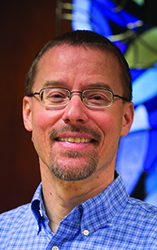
Don Everts
Don Everts is the senior pastor of First & Calvary Presbyterian Church in Springfield, Missouri, and is a writer for Lutheran Hour Ministries and the Hopeful Neighborhood Project. Don has spent almost three decades helping people on college campuses and in the local church become good stewards of their God-given gifts. Along the way, his wife, Wendy, has been helping Don do the same. His many books include The Reluctant Witness, The Spiritually Vibrant Home, and The Hopeful Neighborhood, all of which feature original research from Barna and biblical insights for our everyday lives.
Episode Transcript
FamilyLife Today® with Dave and Ann Wilson – Web Version Transcript
This content has been generated by an artificial intelligence language model. While we strive for accuracy and quality, please note that the information provided will most likely not be entirely error-free or up-to-date. We recommend independently verifying the content with the originally-released audio. This transcript is provided for your personal use and general information purposes only. References to conferences, resources, or other special promotions may be obsolete. We do not assume any responsibility or liability for the use or interpretation of this content.
Celebrating How God Made You and Everyone You Know
Guest:Don Everts
From the series:Discover Your Gifts (Day 1 of 3)
Air date:January 5, 2026
Don (00:04):
Everyone, it turns out, is well made. Everyone is imbued with dignity and beauty at their birth, and even before their birth, because God knit them together in their mother’s womb. What are the implications of that, biblically? What does the research tell us about how people are gifted and how everyone is gifted? People are hungry to have their gifts discovered and they need help discovering their gifts. And they really want to be able to connect their vocation and their other gifts, even with their church.
Dave (00:42):
Welcome to FamilyLife Today, where we want to help you pursue the relationships that matter most. I’m Dave Wilson.
Ann (00:48):
And I’m Ann Wilson. You can find us at FamilyLifeToday.com. This is FamilyLife Today.
Dave (01:01):
Okay, so I have a question.
Ann: Alright,
Dave: If you—I don’t know what you’re going to say—what would you say? If I have any giftings, what would you say mine is, number one?
Ann (01:11):
Are these spiritual gifts?
Dave (01:13):
There’s differences: there’s spiritual gifts; there’s common gifts—any one that comes to your mind—first thing comes to your mind.
Ann (01:18):
You have a gift of teaching.
Dave: Oh, really?
Ann: And you have an evangelistic gift as well; you have an evangelism gift.
Dave (01:25):
That’s what you thought of?
Ann (01:26):
First two, yes.
Dave (01:27):
First one?
Ann (01:28):
Yeah.
Dave (01:28):
You know what I thought for you?
Ann (01:29):
Oh, no; what?
Dave (01:32):
No, it’s good—drives me crazy—generosity.
Ann (01:35):
Oh, I don’t think that’s even in my top two or three.
Dave (01:38):
When I thought of you walking up to a woman in the checkout line at the grocery store, handing them cash; walking up to a drunk lady on a sidewalk in Detroit, handing her cash. And actually putting her in your car and driving her home. I mean, that’s a part of being generous and seeing people.
Ann (01:57):
That’s so interesting that’s the first—it’s because the money is affecting you—that’s why you’re thinking of it.
Dave (02:03):
There have been times I’ve been annoyed by that gift,—
Ann (02:05):
Why are we talking about—
Dave (02:06):
—but it’s a beautiful thing.
Ann (02:06):
Why are we talking about this?
Dave (02:07):
Because we’ve got the guy who wrote the book on gifts in the studio. Don Everts is back with us. I don’t know how many months it’s been, but we love having you here, Don. Welcome back.
Don (02:15):
Thank you; good to be with you, Dave and Ann. It’s so fun. I was just wanting to have a little couples therapy here. This is really fun.
Ann (02:20):
Well, that’s why we brought you in. It’s a secret, but you’re going to help us.
Dave (02:24):
Yeah, and it’s interesting—last time you were here—you have a fascinating life. You’re a pastor in Springfield, Missouri; but you’re also a writer. A lot of your writing has to do with research on different topics. Talk about your life; that’s a unique blend.
Don (02:38):
It is; and it’s fun because I get to work with really nerdy, really smart Christian social scientists, who do these nationwide research studies to find out about relevant topics. And yet, I’m a practitioner; I’m in the church. I’m in the pulpit; I’m in people’s homes; I’m in the coffee shops. It kind of allows me, maybe this kind of stereo view. On the one hand, taking kind of a nerdy, sort of just research-based: “What do we learn?” “What do the statistics tell us or not tell us?” And then I have this other view that’s from a ministry perspective. Maybe, if we had a third view, it would be kind of the biblical one.
They also asked me: “Help us think, biblically, about these topics that we’re looking into as well.” It’s kind of fun: I have a graph here; the Bible open here; and then, I’m thinking about interactions I’ve had with real human beings. It makes me think; and it actually forces me to change, and grow, and learn.
Dave (03:43):
When I was pastoring, we would often, in meetings, say, “Here’s some”—we call it “some-guy research”—I hated that because it meant that I walked off the stage on Sunday; and some guy said, “Hey, what about this?” And then, you bring it into a meeting; and people would say, “We need to change this and this.” And I go, “Wait, wait, what’s our basis? Why are you saying that?” “Well, some guy…”; and I’m like, “Who is this guy?”
Don (04:08):
“Maybe he just had a bad day.”
Dave (04:09):
Exactly! And it drove me crazy. But I was always like, “No, let’s get real data. That’s how you make decisions that are going to be life-changing.”
You had that blend of: you’re leading people in a faith community in a church, and you’ve got real research. Let’s talk about your latest one: —
Don (04:25):
Wonderful.
Dave (04:26):
—Discover Your Gifts: Celebrating How God Made You and Everyone You Know, which, by the way, I didn’t expect …and Everyone You Know.
Don (04:33):
Is that right?
Dave (04:33):
When I saw the subtitle, I’m like, “Yes, you celebrate how God made you and everyone you know”; you’re making a statement.
Don (04:39):
That’s it; that’s right. And part of our approach—and you, a little bit, hinted at this earlier when you were talking about: “Are we talking spiritual gifts or common gifts?”—because the research itself: we were looking at gifts, talents, abilities, passions, skills, whether they’re innate/ born with them or develop them over time. We were specifically and explicitly looking, not just at spiritual gifts, but at what we call “common gifts” or “creational gifts”—gifts— God is a good Creator. Everyone He makes well, and He does a good job. As David put it, “Wonderful are Your works, I’m fearfully and wonderfully made.” Actually, God’s a really good Creator.
With our research, we wanted to focus on gifts in general. And then, from the Scripture, we wanted to look at: “What’s a biblical anthropology?”—not just “What does the Bible say about believers?”—and it has a lot of very great things to say about us that are insightful, but it also has something to say about humanity as a part of creation that God has made. That’s why the title is Celebrating How God Made You and Everyone You Know. Everyone, it turns out, is well-made. Everyone is imbued with dignity and beauty at their birth, and even before their birth; because God knit them together in their mother’s womb. “What are the implications of that, biblically?” “What does the research tell us about how people are gifted and how everyone is gifted?” What I’ve found is we, as Christians, have a lot of experience thinking about spiritual gifts.
Ann (06:16):
And let’s define that as well.
Don (06:18):
Spiritual gifts would be the gifts that are talked about in the New Testament, which are these special empowerments brought by the Holy Spirit. These are special to believers. When you have the Holy Spirit in you, one of the things—not the only thing—but one of the things the Spirit does is imparts these special enablements that empower you to do ministry, empower you to bless other people.
What we’re talking about are common gifts—not common, like not-special—but common; everyone has common gifts that God gives them at their creation.
Ann (06:51):
Whether they’re a believer or not, they’ve been bestowed by God.
Don (06:54):
That’s right. They’ve been bestowed by God, as their Creator; because the Bible tells us everyone has been made by God. And the Bible tells us that God’s a good Maker. Having that view—and what the research shows us; what the Scriptures tell us—there are just some kind of startling implications for when we just actually sit and think about the Doctrine of Creation, if you will.
Dave (07:18):
Right. Well, one of the things I remember preaching, years ago—and I was probably being too honest—but I said, “Often, I’ll judge people.” I know you never do, Don; and Ann never does. But you can sort of form an opinion. It’s fun to do in an airport. You sit there and watch people walk by; and you start thinking things about how they’re walking, how they’re dressed, or whatever. My point, in the day was: it’s almost like, sometimes, we can put a number on somebody: “Oh, he’s a 6, athletically,” or “She’s a…” My point was: “God puts a 10 on every forehead of every person you’ve ever met.”
Don: That’s great.
Dave: In other words, you’ve never met a person in your life who doesn’t matter to God and isn’t gifted by God. I think we miss that. That’s the point of your whole book: Discover Your Gifts. Why do we miss it? Because it’s like you said, “It’s the creation glory of God put in us: the Imago Dei, the image of God is in every person. And yet, we go around and:—
Don (08:19):
We do!
Dave (08:20):
—“First…”; “Second…”; “Third…”; “Fourth…”
Don (08:21):
The biblical language is “showing partiality”; that’s the fancy biblical language. We’re told, in the Old Testament, God shows no partiality and so neither should you. In the New Testament, it’s really clear: “Show no partiality.”
Showing partiality is when it’s like, “Well, you two are different than each other,” and “I’m going to treat you differently than I treat you”; I’m showing partiality. Why do we do that when the reality is everyone is beautifully made?—everyone is knit together? Everyone is—as Calvin put it, and Calvin’s really into the fallenness of humanity—but even he, in his commentary on Genesis, said, “Every human is clothed and ornamented with excellent gifts.” And yet, as fallen people,”—as fallen people—we do have that tendency: we judge other people; we look down on certain people; we dismiss people rather than taking them seriously.
Dave (09:19):
Or we highlight people because of their profession, or their athletic gift, or their musical gift. And the same thing: “What are we doing?”
Don (09:25):
That’s right. And then, some of us do the same thing to ourselves. I’m someone who grew up really struggling with low self-esteem, to the point of self-hatred at times; deep, deep-seated. And we can/you can do counseling for me to find out why that was!
But like that’s weird, right? I’m beautifully made by God; and so what is it like to allow the truth of Scripture—what God says about us—the Bible is like a mirror; you hold it up, because you can see yourself; you learn about yourself. One of the things that you learn is that you’re wonderfully made, and so is that guy you hate next door: “What does that mean about how you feel about yourself?” “What does that mean about how you treat other people?” That’s some of what we explore.
Ann (10:08):
Well, Don, as I hear you say that, I had a front up that no one would’ve thought that I had struggled with any kind of self-esteem issues; but I just covered it well. I really did struggle, and I had a lot of negative thoughts going in my head: “Oh, I’m not good enough,” “I’m not pretty enough,” “I’m not smart enough.”
Dave (10:25):
I’ll put a quick footnote; I know you’re going somewhere. But when we first got married—and I would say to her: “You are beautiful,”—she’d say, “No, I’m not.” I literally laughed out loud: “There’s no way you don’t think that.” I realized—it took me about a year—”She really doesn’t see in the mirror what I see.” That was a real thing.
Ann (10:46):
I think a lot of people struggle with that. Maybe, they don’t tell a lot of people. I think a lot of parents see their kids struggling with it. There’s more reason to now: kids are being bullied; the social media is just a hard place. You struggled with it. Did that have anything to do with why you wanted to write a book like this?
Don (11:03):
It’s part of what deepened the research for me. We were doing research on gifts; because of the research we did about neighborhoods, which told us: “If you want to be changing your neighborhood, it’s all about people using their gifts.” And we’re like, “Well, that’s interesting. Let’s study gifts more.” When we started studying gifts more, both through the social science research and throughout the Scriptures, I tell you, Ann, immediately it got really deep.
Ann (11:27):
In what way?
Dave: You mean for you?
Don (11:29):
Yes!
Dave: Yeah, personal.
Don: Yes! Because here I am—I can sit back, as a theologian: “Yes, this is the Doctrine of Creation,” and “I’m reading Abraham Kuyper’s three volumes on common grace” and blah, blah, blah. But you handle that stuff enough, you’re like, ”I really am wonderfully made.” Thankfully, I’m at a place in life where the love of Jesus just clobbered that in my life. It takes time.
Ann (11:57):
Me too.
Don (11:58):
But I think it brought it back; and I was like, “I wish I had learned the Doctrine of Creation earlier in life. I wish I’d had more preachers, who said, ‘God makes everyone, and He makes them well. Deal with it.’” I wish someone had said that to me; because I would’ve been like, “Well, yeah, everyone else; but not me.” Then the love of Jesus, of course, that can ruin low self-esteem. It got real, I think both because of that and how real that is. In talking with people about this: “How many people like you?” And they’re like, “I haven’t told anyone else, but I’ve struggled with this a lot.”
And then, the other side of it is just we live in an age where showing partiality is now an art form in terms of how people talk about other people, how little grace and generous assumptions we have on others.
Dave (12:56):
Cancel culture is part of that.
Don (12:59):
That’s another reason why it got deep really fast. We’re not just talking about gifts anymore. We’re talking about our humanity and how we treat each other. And man, as Christians, we should be the most gracious people who celebrate the people around us—who have grace on other people—because we know I may think: “’You’re a jerk’; but my God made you. I have to pay attention to that,” which makes it kind of sad when Christians kind of lead, sometimes, in the course of showing partiality.
Ann (13:35):
Exactly.
Dave(13:37):
I tell you—walking around airports, or malls, or neighborhoods with this woman, Ann—and she does that almost every day: she’ll walk up to some stranger: “I’ve seen you.” It’s just amazing. I think you couldn’t have done that, years ago, when you were looking in the mirror, and thinking, “I’m not enough.” Now, you understand who you are in Christ; and she walks up to strangers, and says, “Oh, man, let me tell you: ‘Your hair…’ ‘Your smile…’; and you just see them light up. You can tell they’ve never been told this by anybody, because everybody else is competing against them. It just brings life to their soul, because you’re saying, “You’re made in the image of God. You don’t know this, but I see something in you. I just want to say, ‘Wow.’”
Ann (14:22):
But Don is what you’re saying, too: the more you’re in the Scriptures—the more you have encounters with Jesus and this God who created us—you start to see yourself, and the whole world, and everyone else in a different way.
Don (14:35):
It transforms us. You think of the early Christians—I think we talked about this some when I was here last—but how the early Christians treated the people around them and the people who they had innate bigotries against. Part of why the world kind of paid attention to Jesus is because the early Christians were nice to people who were persecuting them, and they treated them with dignity. And it’s like, “Why are you treating me with dignity?” I think this is some of the “Why?”—because we have a God; and we have this biblical anthropology that tells: “Here’s actually what humans are…”
Now, is every human also broken and fallen? Yes, absolutely. It’s not that the only thing the Bible has to say is that all humans are wonderful. Obviously, that’s not the whole story; but it’s part of the story. I think when we just focus on fall/redemption; fall/redemption, and we don’t say, “Well, actually the whole story is creation, fall, redemption, consummation; that’s actually the full biblical narrative.” That starts to, I think, invade these bad habits of how we see ourselves; how we treat others.
Dave (15:41):
So as you are studying gifts—the spiritual gifts; common gifts—where do we start? If we want to discover our gifts—your book title—what do we do?
Don (15:50):
One of the things I would say to people is: “If you haven’t heard about spiritual gifts, obviously, pay attention to that.” But one of the things our research showed us is, when pastors are talking about gifts, they’re talking about spiritual gifts. When Christians are reading books about gifts, they’re reading books about spiritual gifts. Anytime they’re talking about any other gifts, they’re specifically talking about them in the context of a church.
One of the more sobering statistics we found was, when we asked people to agree/disagree to the following statements—one of the statements was: “In my church,”—this was to pastors—“In my church, people are celebrated for the gifts they have that they use in their everyday life.” Another statement was: “People at my church are celebrated for the gifts they have that they use for the church’s ministry.” You can probably guess what the statistic was.
Dave (16:44):
Oh, yeah.
Don (16:44):
“We celebrate spiritual gifts,” and “We celebrate common gifts that are used for the sake of the church.” But we have multiple vocations—we have callings in our households, in our neighborhoods, at our jobs—we’re just not talking about it.
In answer to your question—that’s my preamble—I am going to answer your question: “Where do we get started?” My encouragement to people is: “Think broader than maybe you’re used to thinking.”
Ann (17:07):
I don’t think most of us have. In the church, we’re always focused on the spiritual gifts and how God wants to use us to further the kingdom. But the common gifts—we even answered one another’s gifts, what we’re good at—they were spiritual gifts that we named. It’s interesting to distinguish that.
Dave (17:24):
You didn’t talk about how I could shoot a free throw. I thought that you saw that.
Ann: I should have said that you’re the most athletic person I’ve ever met in my life.
Don (17:28):
Interesting. Gifts do go away with age, by the way.
Dave (17:31):
Not that one.
Don: Okay; okay.
Dave: If the hoop is like four feet high, it still works.
Don (17:35):
“We’re fine”; “We’re fine.”
Dave (17:35):
I remember walking up to a guy in our church, years ago, who is a CEO of a company. I remember saying, “Hey, I know you’re an usher here, and probably like that; and I’m glad you do it. But I wonder if you could help me lead this meeting? I have a pretty high leadership meeting coming up; and you’re gifted, obviously, at that.” He looked at me, like, “You want to use that gift? I serve here, and I appreciate it. Nobody’s ever asked me to use that.” I’m like, “My goodness; you have a better leadership gift than I do. Even if we sat down, and you helped me structure: ‘What this meeting would look like,’ I guarantee it’s going to…” He just looked at me like, “Nobody’s ever asked for that here.” And that’s what you found out.
Don (18:19):
Absolutely, and the research told us people are hungry for that. People are hungry to have their gifts discovered, and they need help discovering their gifts. That’s one of the things we found. They really want to be able to connect their vocation and their other gifts, even with their church; they long for that.
Reminds me of the story of Gary Haugen who started International Justice Mission. He tells a story of—I think it was the same thing—he was an usher in his church. He’s this brilliant lawyer who has all this experience in these justice issues in the world. He just hit a place of saying, “I bet I could use those gifts for God, too, in His kingdom.” And then, of course, this fabulously successful—like profound—profoundly impactful ministry—
Ann (19:04):
—that has affected the world.
Don (19:06):
—that has affected the world.
As a pastor, I wonder, “How many Gary Haugens are hanging out in my church?” I’m like, “Hey, could you be a greeter?” Nothing wrong with being a greeter; we need greeters, and hospitality is at the core of the gospel. But are there people—I love what you did—you said, “I know, because of your life, that you have these leadership gifts.” There are people with technical gifts, and people with artistic gifts—that I am not naming those and calling those out—that’s sobering for me, as a pastor, especially when you look at the research. You find that people really want to discover their gifts, and they need help doing it.
Dave (19:51):
Hey, let me just pause and say this: our financial partners are the heartbeat of this ministry. When you join this monthly-giving community, you’re not just donating; you’re building something eternal.
Ann (20:03):
And we’d be so honored to have you on the journey with us. We really would. So here’s the question: “Will you join us today?”
Dave (20:12):
I hope your answer is “Yes.” If it is, go to FamilyLifeToday.com. You can click the “Donate” button right there and become a part of the Monthly Partner Program.
Ann (20:25):
I love that you have a way to be able to assess your gifts. We can go online; what is it again?
Don (20:31):
—EveryGift.org.
With the research, we started finding out:
Gifts are really, really important.
They matter to God. He gave them to you because He wants you to use them.
We’re not talking about them very much, and people have a hard time discovering them.
We took the research, and reverse engineered it, and created a kind of common-gift assessment tool. Christians/non-Christians, alike, can use it. It’s called the “Every Gift Inventory.” It kind of looks at these different areas; and by asking people questions, just trying to help them think about themselves in different ways.
We were talking about how I helped create this assessment tool. And then, when we had it up and running—beta version—they said, “Well, Don go in and take it to kind of test it and see if it works; see if the tech works.” I was blown away—what I learned by doing it and what it spit out at the end—to say: “Here’s what you’ve said…” made me recognize I had been in a season of life, where I was not using my leadership gifts. This kind of held up a mirror to me. One of my common gifts was leadership gifts. It actually led to a vocational change for me, because it helped me discover.
Ann (21:44):
And this is a tool you helped to create?
Don (21:46):
Yeah, I knew it all. Yeah, I wrote all the sentences and did all that stuff. But there’s something about going through the process—and it’s totally free—it’s online; people can just do it and see what they can learn.
Ann (21:56):
I started doing it this morning. It’s unlike any that I’ve taken—I’ve taken a lot—but it’s very unique. I thought: “Dave, we should both do it,” “It would be great as a family.”
Dave (22:06):
When you were saying that, Don, I thought, “Yeah, wouldn’t it be cool if our listeners, right now, said, “Let’s do this as a family”?—
Don (22:11):
Totally.
Dave (22:11):
—mom, dad.
Don (22:12):
Absolutely.
Dave (22:12):
You’re going to learn something about your kids.
I’m guessing—because you learned about you’re not using your leadership gift—you [are now] are thriving in your life; that’s what I’m guessing. I’m not saying everything’s wonderful, but you’re doing something you’re good at. So that’s when—often, we do things we’re not good at; and we just hate our lives.
Ann: It changed your whole course of life.
Don (22:29):
It changed my course of life. The company I was working at, in doing the research, was a little disappointed. I said, “This was so successful. I had an ‘Aha’ moment, and I need to be back in the church. I need to be using my leadership gifts.” God shapes us, gives us gifts so that we will use those in our vocations and in our callings in life; you’re right.
I do think, every now and then, sometimes, we’re just in a season just faithfully, just keep plugging away. Sometimes, that’s what it looks like. And other times, it’s good to get up off the dance floor; kind of take a look at: “How am I shaped? God made me, and what does that mean?” and “Am I ignoring anything?” “Am I being a bad steward of something God’s been really generous with, and it is just sitting there?”
Dave (23:16):
Well, one of the best pieces of advice I was given, as a young man, just starting off in a vocation, it was in ministry, was: “Do what you’re good at. Find others to do what you’re bad at.” Now, that doesn’t mean you don’t develop your weaknesses.
Don (23:30):
That’s right; that’s right.
Dave (23:30):
But I thought, at that moment: “No, no, no; you do stuff. You do everything, because you shouldn’t like everything you do. And if you’re bad at it, well, you just got to do it.” No; he said, “You’re good at something—God’s given you a gift—you’ll love life, and you’ll love your job if you’re doing that every day. There’s other people, who are really good at what you’re bad at;—
Don (23:49):
That’s right.
Dave (23:49):
—”partner with them. Let them do what they’re good at/that you’re bad at.”
Ann (23:54):
I think that was just a great conversation with Don.
Dave (23:57):
Yeah, it is. And his book’s excellent as well. You can get it at FamilyLifeToday.com, and click on the link in the show notes. Again, it’s called Discover Your Gifts: Celebrating How God Made You and Everyone You Know. Go to FamilyLifeToday.com; click on the link in the show notes, and get the book.
Ann (24:13):
I really think one of the greatest passions of my life is growing spiritually stronger—going deeper, learning more, connecting to Jesus more—and maybe, you feel like that too. You just want more; you want to learn more. You want to grow, and you want to go deeper. You can by going to FamilyLife.com/StrongerFaith. We’ve got resources there that can help you grow in your faith. Go again to FamilyLife.com/StrongerFaith.
Dave (24:47):
FamilyLife Today is a donor-supported production of FamilyLife®, a Cru® Ministry.
Helping you pursue the relationships that matter most.
If you’ve benefited from the FamilyLife Today transcripts, would you consider donating today to help defray the costs of producing them and making them available online?
Copyright © 2026 FamilyLife. All rights reserved.
www.FamilyLife.com