

Co-Parents and Step-Unity: Transforming Conflict Into Cooperation–Ron Deal
Blended families face unique battles: guilt-paralyzed bio parents, stepparents feeling threatened, ex-spouses overstepping. Ron Deal and Gayla Grace unpack traps that sabotage marriage and parenting—erase/replace mindsets, unilateral fixes, defensiveness—and show how co-parents can lean in, communicate intent, and send “no-threat” messages. When couples unite around kids, check in before ex-decisions, and prioritize long-term child good, hope, stability, and even transformation become possible.


Show Notes
- Resources for blended families familylife.com/blended
- Save the date! Blended & Blessed® is happening April 18, 2026. Find details at blendedandblessed.com
- Ron Deal & Gayla Grace on common blended family traps
- Get the Smart StepMom book on FamilyLife's shop.
- Thanks to the Christian Standard Bible for sponsoring this episode. Learn more at CSBible.com.
- Follow us on all social platforms: Facebook | Instagram | YouTube
- Find resources from our podcast at shop.familylife.com.
- Download FamilyLife's app!
- Help others find FamilyLife. Leave a review on Apple Podcast or Spotify.
- Check out all the FamilyLife's podcasts on the FamilyLife Podcast Network
Looking for a way to keep going?
These six conversations are just a glimpse into the type of conversations prompted by our new marriage study, Art of Marriage, currently 25% off through August 31.
If you’ve been craving more—more connection, more understanding, more joy together—Art of Marriage is a powerful next step. This six-session, video-based study dives into the core of how to love our spouse the way God loves us: how to have an unwavering love no matter the challenge, a love full of strength and resiliency, a love that is selfless, a love that forgives because of the grace He has shown us, a love so intimate that you feel fully known and seen, and a love that is a representation of Christ just in how others see you love each other.
You can walk through it with friends, a small group, host an event at your church, or go through it with just the two of you. Learn more or preview session one at ArtofMarriage.com
About the Guest
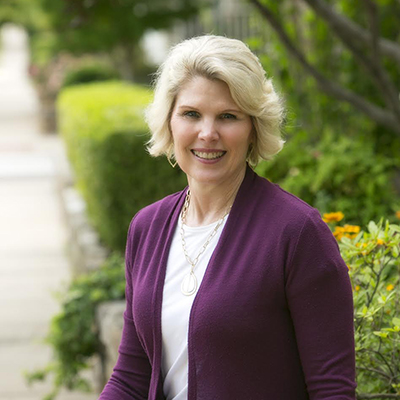
Gayla Grace
Gayla Grace serves on staff with FamilyLife Blended, a division of FamilyLife, is the founder of Stepparenting with Grace, and co-founder of Sisterhood of Stepmoms.
She is a writer, speaker, and coach on stepfamily life and is passionate about equipping blended families. She holds a master’s degree in Psychology and Counseling and is the author of Stepparenting With Grace: A Devotional for Blended Families and co-author of Quiet Moments for the Stepmom Soul and Unwrapping the Gift of Stepfamily Peace.
Gayla and her husband, Randy, have been married since 1995 in a “his, hers, and ours” family. She is the mom to three and stepmom to two young adults. Gayla and Randy are recent empty nesters and live in Conway, AR.
Twitter: @GaylaGrace
Instagram: @FamilyLifeBlended
Facebook: @FamilyLifeBlended
Website: www.familylife.com/blended
Gayla Grace serves on staff with FamilyLife Blended, a division of FamilyLife, and is passionate about equipping blended families as a writer and a speaker. She is author of Stepparenting with Grace: A Devotional for Blended Families and co-author of Quiet Moments for the Stepmom Soul. Gayla holds a master’s degree in Psychology and Counseling. She and her husband, Randy, have been married since 1995 in a “his, hers, and ours” family. She is the mom to three and stepmom to two young adults.

Ron Deal
Ron Deal is Director of FamilyLife Blended®️ for FamilyLife®️ and President of Smart Stepfamilies™️. He is a family ministry consultant and conducts marriage and family seminars around the country; he specializes in marriage education and stepfamily enrichment. He is one of the most widely read authors on stepfamily living in the country.
Episode Transcript
FamilyLife Today® with Dave and Ann Wilson – Web Version Transcript
This content has been generated by an artificial intelligence language model. While we strive for accuracy and quality, please note that the information provided will most likely not be entirely error-free or up-to-date. We recommend independently verifying the content with the originally-released audio. This transcript is provided for your personal use and general information purposes only. References to conferences, resources, or other special promotions may be obsolete. We do not assume any responsibility or liability for the use or interpretation of this content.
Co-Parents and Step-Unity: Transforming Conflict into Cooperation
Guest:Ron Deal
From the series:Co-Parents and Step-Unity: Transforming Conflict into Cooperation (Day 1 of 1)
Air date:April 13, 2026
Ron (00:04):
Even if you’re going to say, “Yes,” to an ex-spouse around a schedule change, for example, you need to check, first, with your spouse.
Gayla (00:12):
Right.
Ron (00:13):
Go to that marriage—confirm; check in—”Want you to know this is not about me caring for her. This is about my kids and the schedule. I feel like we’re going to have to make this change. It is such a pain, and I’m so sorry. I just want to let you know what this is and what it is not,”—that sort of stuff matters.
Ann (00:38):
Welcome to FamilyLife Today, where we want to help you pursue the relationships that matter most. I’m Ann Wilson.
Dave (00:45):
And I’m Dave Wilson, and you can find us at FamilyLifeToday.com. This is FamilyLife Today.
Ann (00:58):
Hey, how often did our parenting disagreements lead to emotional distance or conflict in our marriage?
Dave (01:07):
We never had any parenting conflict; we agreed on everything. Did we agree on anything?!
Ann (01:13):
Here’s what I would agree on: I always had to be the bad guy.
Dave (01:16):
You were.
Ann (01:16):
You were the good guy.
Dave (01:17):
That’s the way it sort of worked, and I’d redo it if I could. Now, they’re adults; and we got grandkids. I think parenting conflict is part of marriage.
Ann (01:28):
Oh, of course!
Dave (01:29):
But today, we’re going to talk about parenting conflict in blended families. I grew up with a stepmom. I watched—it’s a real deal—and speaking of deal, we got Ron Deal, who oversees our FamilyLife Blended, the largest equipping ministry for blended families in the world. He’s with FamilyLife, and he’s with us today.
Ron, welcome to FamilyLife Today.
Ron (01:56):
Hey, it’s great to be with you guys. You know how much I love you, and how much I love being with you on this program.
Dave (02:02):
Yeah, we love having you on. Before we start talking about parenting, tell us about the upcoming Blended & Blessed livestream.
Ron (02:10):
Man, the big news about Blended & Blessed 2026 is it’s free! It’s free to livestream. It is free for churches to host it—you can put a group together—small group, large group; doesn’t matter. It’s still free for you to livestream that. [It’s] going to be Saturday,
April 18, in Oklahoma City; yes, there’s a live audience. Anybody, within 100 miles of Oklahoma City, come see us; we’d love to have you there. Small cost for them to cover their lunch cost; but essentially, the entire day is free.
We got a great lineup. Kathi Lipp is back with us; she is just hilarious and fun. Gayla Grace, who’s on our team; you guys know how solid she is. Davey and Kristi Blackburn from the Nothing Is Wasted Ministries.
Ann (02:53):
Oh, we love them.
Ron (02:53):
And Cheryl Shumake, who is one of our favorites around here. I guess I’m going to be there too. And Brian Goins, another one of our favorites around here, he’s going to be emceeing as we talk about “Hope for the Journey”—that’s our theme this year—“Hope for the Journey.” People can check it out: blendedandblessed.com.
Dave (03:10):
Hopefully, that thing will be filled up and people will watch it on livestream.
Ann (03:13):
It’s free; who wouldn’t want to do this? It’s going to be some of the best talks on these topics that you’re going to ever get, so sign up.
Dave (03:21):
How common are parenting disagreements in blended families?
Ron (03:26):
Well, couples in first marriages tend to fight about the hot topics—sex, money, in-laws—that kind of stuff. Blended family couples tend to fight about parenting—tend to fight about co-parenting with a former spouse and kids moving back and forth—it’s the parenting stuff that really ignites conflict in their relationships. Around here, we’ve said it before on this program: “At the intersection of Parenting Street and Marriage Avenue in blended families, there’s a lot of accidents that happen right there.” Everything that is a parenting conflict becomes a marital issue really fast for blended family couples.
And by the way, if there’s something going on in the other home, that’s a parenting-related thing that ripples through the co-parenting relationship into your home. And the next thing you know, you’re having conflict in your marriage. Couples really have to shore up their parenting teamwork in blended families so they can protect their marriage.
(04:23) And they work on the between-home dynamics, with co-parents, on behalf of their kids. This is a really important subject. As you guys know, there’s a lot of people who fall into this category. The recent Barna Report, that FamilyLife helped to sponsor, found that 53 percent of all children, under age 18, are living in some sort of complex family environment: single-parent home; moving between mom’s house, dad’s house, or a blended family home; or they will have a stepparent in their lifetime. This is a super relevant discussion for a lot of people listening or watching.
Dave (04:57):
Not long ago, you were talking with Gayla Grace on the FamilyLife Blended podcast about this. What was the topic that day?
Ron (05:04):
We were talking about the common traps that blended family couples fall into, as it relates to parenting and marriage. What we’re going to do today is share a portion of that conversation with our listeners. If there’s not a stepparent in your home—whoever’s listening right now—I bet you know somebody who could benefit from this. We just want to ask you to share it with them, and keep listening yourself, to learn something that does apply to you; because there’s always a takeaway somewhere. As you guys know, Dave and Ann, Gayla Grace is on our team, here at FamilyLife Blended. She’s a writer, speaker; does a fabulous job. She’s a regular contributor to our big events, like Blended & Blessed. And she hosts our Women & Blended Families livestream that is monthly on social media that’s available on YouTube for people to watch later.
Ann (05:52):
This is going to be good. Okay, let’s play a portion of Episode 146 of the FamilyLife Blended podcast with Ron Deal and Gayla Grace.
[Previous FamilyLife Blended Podcast]
Gayla (06:04):
When the biological parent gets paralyzed—ooh, this is a pretty common dynamic, I feel like—you become protective of your kids. So then, you don’t do the thing of disciplining; and then, the stepparent steps in. That’s not a good combination.
Ron (06:20):
Yeah, exactly. Being paralyzed—what’s at the heart of that?—I think guilt, for some people?
Gayla (06:26):
—fear.
Ron (06:27):
—fear. Let’s unpack both of those. Guilt would be: “My kids have been through a lot.”
Gayla (06:31):
Exactly.
Ron (06:32):
Sometimes, it’s: “I did something in my first marriage that led to a lot of pain for my children. It’s made life difficult for them,” and “I can’t get away from my own guilt of what I did.”
Sometimes, it’s just the general guilt of life has not brought them, and you, good things. You weren’t necessarily personally responsible for causing the end of your first marriage, for example, but you still sort of feel responsible in some general way.
Gayla (06:59):
We never want our kids to go through hard things. They’ve gone through something hard if you’ve ended up in your remarriage: “There’s something that’s happened back here.”
Ron (07:05):
That’s right, and you just feel bad about it. That guilt ends up paralyzing you today; because you think, “Well, they’ve been through enough.”
Gayla (07:13):
Right; “I’m just going to slide on this whole parenting thing.”
Ron (07:15):
“I’ll let them decide what time they go to bed rather than tell them what time they’re going to go to bed.”
Gayla (07:19):
Right.
Ron (07:20):
That’s the guilt thing. What about the fear?
Gayla (07:23):
I think you’re just fearful of: “What is this parenting thing going to look like as you try to parent with someone who’s a stepparent to them?” “Are they going to do it the same way?” “How’s the child going to react to it?”
Ron (07:35):
I just thought of another one. People who have another home, not everybody does; but most do.
Gayla (07:40):
Yes.
Ron (07:41):
Children are going to the other home. There’s fear about what they’re being taught, or “What’s the character example that’s being set for them over there?”
Gayla (07:48):
—or “If I’m the bad guy here, are they just going to go live over there?”
Ron (07:50):
Okay, so losing contact and connection with your kids. The influence of the other home—I feel like I have to parent opposite of what the other home is doing—that sort of paralyzes my ability to take initiative and do things here.
Gayla (08:04):
And then, there’s an ex-spouse in this other home: “How are they going to react to it?” “Are they going to give us pushback and just create more stress on the kids?”
Ron (08:13):
Yep, these are all little tough things.
The reason we’re putting words on them for you, the listener or the viewer, is you just need to know this about yourself; so that, you can say, “That’s what it is.” This is where you, then, have agency that you could get to make a choice, but what you’re going to do about that guilt or that fear, and you’re going to decide whether you let that dominate your parenting or not.
Gayla (08:38):
Right.
Ron (08:38):
I know the temptation is still there, even though you know what it is; but if you can’t put words on it, you don’t even realize how much it’s paralyzing you.
Gayla (08:47):
I think, for me, I always try to look at the long-term effect: “Is this going to serve my child well in the long run?” It’s not if you’re becoming paralyzed in your parenting.
Ron (09:02):
So good. Okay, so that’s the first one.
The second one—this is for stepparents who are listening—acting like you’re trying to, what I call, “erase and replace the other biological parent.” Let’s say you’re a stepfather; and the kids have a biological dad. You sort of jump in there, and say, “I’m the new sheriff in town; this is the way it’s going to work.”
Gayla (09:24):
“You’re going to call me ‘Dad.’”
Ron (09:25):
“You’re going to call me ‘Dad,’”—all of those high-demand sort of things. Essentially, you’re acting like you are erasing and replacing their biological father. What that does is it sends a very strong message to the children—a couple of messages—you may not intend to send this; but you are saying to them: “I’m better than your dad. Your relationship with your dad is intimidating to me; and therefore, a threat to me. Therefore, I’m going to try and diminish your relationship to your father.”
Wow; just think about that for a minute. Imagine just actually saying to one of your stepchildren: “Your relationship with your dad is really unimportant, and you should not be loyal to him and listen to him. I should be the guy in your life, who takes that spot in your heart.” Can you just imagine saying that, out loud?”
Gayla (10:13):
No, and the alarms that will go up with that stepchild.
Ron (10:16):
Exactly. That kid’s going to look at you as unsafe, untrustworthy: “You are now a threat to me and my relationship with my dad.” Guess who gets erased and replaced?
Gayla (10:26):
Yeah, the stepparent.
Ron (10:27):
You do! So this totally backfires.
That’s just the child’s reaction; imagine your spouse’s reaction when they sort of pick up on all of this.
Gayla: Oh, of course.
Ron: So then, they’re against you, too; now, you got a marital problem.
Gayla (10:40):
Right.
Ron (10:41):
None of this is helpful, so you can’t say that. And you certainly can’t say “erase and replace” to the biological dad directly, whether to the child or to the bio-dad; that is not your place. And the good news is you don’t have to erase anybody.
Gayla (10:56):
No.
Ron (10:57):
The one thing we like around here about the word, “bonus,”—just this week, I heard somebody in Denmark use the word, “extra”: “You’re an extra parent.” That sort of works for them there.
Gayla: Interesting.
Ron: The idea of that is really great; because, “If I have to erase you, there’s only one spot where I can stand or you can stand; and one of us has got to go.” Well, no; that’s not right. “Bonus” or “extra” says there are multiple spots.
Gayla (11:19):
Right, and there’s room for all of us here.
Ron (11:21):
Dad’s going to stand in his spot and be dad, as it should be. I’m going to come along and stand in my own place—be my own person, have my own influence, and find my own relationship with you, child—“We’re going to be okay, separate and apart from whatever’s going on with your relationship with your dad.”
Gayla (11:37):
Right. But what about when the biological dad does feel threatened by the stepparent? We talk, sometimes, about this “no-threat message” that we might need to send to the biological parent.
Ron (11:48):
You mind unpacking that?
Gayla (11:49):
We actually did this with my husband and my former husband; because he was feeling very threatened by Randy in regards to his relationship with my girls. We just had a meeting with him and Randy; just said, “Listen, I want to be an additional person that loves and encourages, and is there for these girls. I’m not trying to replace you.” It was very helpful.
Ron (12:10):
We have a video that kind of unpacks the no-threat message, and how you can lay it out and say it, and what form it will take. We’re going to get that up on YouTube. We’d love for you to look that up, and I think it’ll be really helpful.
Gayla (12:23):
You know, that doesn’t have to be done in person—you can even do it through an email or something if it feels better—but just sending the message that: “I’m not trying to replace you as the bio-parent.”
Ron (12:34):
One more story about this, because you just sparked a memory. We had a woman contact us one time, who said, “I read about the no-threat message.” She was reading The Smart Stepmom book, and she’d seen it in there. She said, “I knew that my relationship with my husband’s ex-wife was so poor that I couldn’t communicate the no- threat message directly, not even through an email.”
Gayla: Wow; wow.
Ron: It was like, “Obviously, there’s a lot of water under that bridge.” She said, “I just resolved in my heart to send the no-threat message to my husband’s ex- through her children.” I said kind things about her to her children when they were at our home. I told positive stories; and I asked about her and their relationship with her; and I celebrated their relationship with her. She said, “My hope was her kids would leave my house, and go to her house, and sort of somehow convey those messages.”
Gayla (13:30):
Wow.
Ron (13:31):
Four years later, she sends me a picture of her and this other woman—her husband’s ex-— what we call her ex-wife-in-law; and they’re standing, side by side. She said, “We have a very cordial relationship today. When she brings the kids over, she usually comes in; and we visit for a little bit.” She’s drinking tea; and “We’re having a conversation,” and “When I go and pick them up, we usually say, ‘How you doing?’ We meet at the soccer field; and it’s very cordial, very get-along.”
She said, “As a matter of fact, you’ll see in this picture, this woman’s holding a child, an infant.” She said, “That’s my baby; we just had a baby—
Gayla: Oh, my goodness!
Ron: —”my husband and I. She’s holding my baby. I trust her that much.” What a transformation, but it’s because she resolved to not be a threat.
Gayla (14:13):
Well, it started with her heart. What’s in her heart spilled over, and it was contagious all around. That’s beautiful.
Ron (14:20):
And it just goes to show you: you can communicate the right message, or the wrong message, through the children, even without words.
Gayla (14:26):
Right.
[Studio]
Ann (14:31):
You’re listening to FamilyLife Today. We’re listening to a portion of the FamilyLife Blended podcast with Ron Deal. To learn more about this ministry, visit familylife.com/blended.
Dave (14:43):
Alright, let’s get back to the conversation.
[Previous FamilyLife Blended Podcast]
Gayla (14:46):
That’s great.
Ron (14:47):
Let’s do another one.
Gayla (14:49):
Unilaterally trying to right the wrongs in a child’s life—bio-parents’ parenting or the parent/child relationship—and you give an example here. I’ve heard Laura talk about this—Laura Petherbridge—[who] co-authored The Smart Stepmom. She really had issue with the diet of her stepsons, and was determined she was going to fix it! It backfired in a huge way.
Ron (15:11):
Wow; yeah. “You can make enemies real fast,”—I think is the message there. It comes from a good heart—so many people want to do something that’s helpful for the children—but the keyword here is “unilateral.” It’s not that you see something, and you want to try to speak into it. Again, [with] that, you should be cautious about, even in the beginning of your blended family journey. Try to go through your spouse—their biological parent—rather than directly to the children. But unilateral means you haven’t even talked to your spouse.
Gayla: That’s dangerous.
Ron: You’re just making a decision.
Gayla (15:48):
—and it’s not your child!
Ron (15:49):
“I’m changing the foods you eat, whether you like it or not,” and “…whether”—husband—”you care about it or not”; that was Laura’s situation. That’s just really, really dangerous. And even though you have good intentions, it probably will backfire on you; because people don’t always understand your intentions. They don’t know you well enough to trust you that much, and it just feels like you’re invading their territory.
Gayla (16:09):
You have to, at least, start by talking to your spouse about it, the parent of those children; that’s a starting place. And then, if they’re saying, “No go”; then, you don’t.
Ron (16:19):
Yeah; then, you don’t.
Okay, I’m backing up one. Here’s another one: the biological parent is easily defensive or dismissive of the stepparent’s observations or suggestions.
Gayla (16:32):
That is so dangerous; because what I found is: Randy had an objective opinion about my girls that, sometimes, I couldn’t see; because I was entangled, emotionally, in a way that he wasn’t. He could see some things. If I was just defensive about it all the time, then, I wasn’t going to want to change what he was saying needed to change. He really brought some things to the table that I needed to recognize.
Ron (16:55):
Let’s unpack that; because I think the hard part about this is: “Wow, something just went off in me. You’re saying my children”—”my girls” in your case—“something’s wrong with them? You’re sort of saying I’ve been a bad parent, or there wouldn’t be something wrong with them.”
Gayla (17:10):
Right.
Ron (17:11):
It feels like a double little whammy here, and that’s the defensive part.
Gayla (17:15):
Right. But if it comes from a place of love—and they tell you that, to start—then, that’s what makes a difference. When he presented it, it would be, “Gayle, you know I love your girls. You know I want what is best for your girls, but here’s some things that I’m seeing that I think we need to talk about.”
Ron (17:33):
Okay. You got to slow down the defensiveness; you got to open up and try to be more objective.
And then, I always tell people, “Make sure your heart gets communicated: ‘My desire is to help your girls.’”
Gayla (17:46):
Right.
Ron (17:47):
“’I really want to see them learn more responsibility,’”—or something—”and I want to be a blessing to them. I’m just wondering if we can talk about this.” That gets the positive intent out on the table; rather than, “Oh, man; we got some problems in this house we got to deal with,”—that’s harsh.
Gayla (18:02):
And it’s not to say that we did it all perfectly in the beginning, because we didn’t. Sometimes, he did start harsher; I did get defensive. But we learned from it; and eventually, I could hear what he was trying to tell me.
The truth is: my oldest daughter has struggled with anxiety, and that’s what he was seeing. I was blaming it on the new marriage, the divorce—“She just can’t cope,”—but there was a deeper issue there that needed to be addressed.
Ron (18:25):
So it turned out to be a good thing.
Gayla (18:27):
It did, because we got her into counseling. She really thrived when she got the help that she needed.
Ron (18:33):
To that end, let’s just say: “Stepparents do have something to offer.”
Gayla (18:37):
They do! Oh, my goodness.
Ron (18:38):
Sometimes, that outsider can just pinpoint something or see it; because, as you said, they’re not so wrapped up in it like you are. And so: “Yes, there’s something here.” It doesn’t mean: “Okay, stepparents, calm down; it doesn’t mean you’re right all the time.”
Gayla (18:52):
Yeah, that’s a good point. Because we do know our kids!
Ron (18:55):
Right; yeah, exactly: “But there’s something there.”
What if you disagree? Let’s say—another occasion—Randy brought something to you. You’re holding your defensiveness—you’re listening, objectively; you hear it out—and you just, at the end of it, don’t agree.
Gayla (19:10):
I think that needs to be expressed; because the truth is: “My girls are my girls. They are different than his kids.” He’s used to kids behaving a certain way, and they don’t always behave the same way that you think they should.
Ron (19:23):
So there it is: it’s a both/and. Everybody’s going to have something to share—and on any given occasion—you might be spot-on, and you might not be. It’s a conversation—you, as parent, and stepparent have to talk, listen, negotiate—try to figure out what you’re going to do; and pursue oneness and unity as, you then, walk out whatever decisions you make.
Gayla (19:43):
Right. And neither one of you insists that you’re right. Listen to both sides; and then, decide.
[Studio]
Dave (19:53):
Hey, before we keep going, let me just say this to the listener: every single day, families around the world are facing real struggles. FamilyLife is here with gospel-centered help and hope. When you become a FamilyLife Partner, your monthly support fuels this work.
Ann (20:09):
And with your monthly gift, you’ll become a part of a community that receives insider updates, which is pretty amazing.
Dave: Yes, it is.
Ann: And who doesn’t want to be a part of an insider community? You also get invitations to special events and more because, together, we’re helping families really grow stronger in Christ; so join us.
Dave (20:30):
Just go to FamilyLifeToday.com, and tap the “Donate” button at the top of the page.
[Previous FamilyLife Blended Podcast]
Ron (20:39):
Number five.
Gayla (20:40):
“Letting your co-parent, a former spouse, dictate your home schedule and autonomy more than your spouse.” This is so dangerous in marriage; because this is going to create so much conflict in marriage if one feels that: “All you’re doing is letting that ex-spouse, over there, dictate everything that goes on in our life.”
Ron (20:57):
I’ve had a lot of conversations with couples, where the stepparent speaks up, and says, “Wow, I suggest something—and maybe, we go round and round—or I don’t know if it’ll ever happen. But his ex- calls, and he hops to it. He’s trying to keep peace,”—for whatever the motivation is; not necessarily a romantic motivation—but just to keep-the-peace motivation means the other household has more say on your schedule, your life, your finances, whatever. That just feels like they’re more important than you.
Gayla (21:31):
Well, the reality is—especially, in the case of a dad, who has a mom in the other home—she carries a lot of power. The biological mom carries a lot of power, and the dad knows that; and so he caters, a lot of times.
Ron (21:45):
There has to be this understanding—again, between the married couple—a lot of conversation needs to take place so that the stepparent gets what the fears and concerns are of the biological parent as it relates to the co-parent. That doesn’t excuse—“You never say, ‘No,’”—
Gayla: Exactly; I agree.
Ron: —there still need to be boundaries. And even if you’re going to say, “Yes,” to an ex-spouse around a schedule change, for example, you need to check, first, with your spouse.
Gayla (22:14):
Right.
Ron (22:16):
Go to that marriage—confirm; check in—“I want you to know this is not about me caring for her. This is about my kids and the schedule. I feel like we’re going to have to make this change. It is such a pain, and I’m so sorry. I just want to let you know what this is and what it is not,”—that sort of stuff matters.
Gayla (22:35):
It does. And you know what I’ve heard, Ron—I’ve heard people say—”If they had just talked to me about it, I would have been okay with it; but instead, they just made the decision; and I was disregarded. That’s what’s hurtful.”
Ron (22:46):
Everybody’s going to be unhappy with the change that has to take place; but you can, at least, check in with one another; and make sure you’re on the same page.
[Studio]
Dave (23:01):
We’ve been listening to a portion of the Family Life Blended podcast. And Ron Deal’s with us. Ron, that last comment seems to have come sort of full circle.
Ron (23:11):
Yes, absolutely. We started the conversation talking about how important it is for couples to get on the same page about parenting in order to protect their marriage, and we came full circle back to that. All couples need parental unity. Blended family couples really need it, because there’s some upside down dynamics that work against them. Because those conflicts are somewhat normal, or predictable, we just need to try to work on it: find that unity so they don’t become toxic to your family and to your future.
Ann (23:45):
Okay, Ron, we talked about Blended & Blessed, the conference. When is that?
Ron (23:49):
Saturday, April 18, 2026, live in Oklahoma City; live streamed around the world for any couple or any church that wants to share with others.
Dave (24:00):
And as you might have heard before, it’s free!
Ann (24:03):
Free!
Dave (24:03):
Doesn’t cost any money. We really want to encourage couples to attend, and we encourage churches to livestream the event to a group of couples in your church. Ron’s team will provide you with everything you need to promote it. You can get the link in the show notes at FamilyLifeToday.com. Click on that link, and you can get all signed up.
Ron (24:26):
Guys, we know most churches just really don’t have the expertise to put on a blended family event; that’s why we do all the work. That’s why we make this available to you for nothing. Just partner with us, and let’s make a difference in a family’s life.
Ann (24:39):
Thanks, Ron. Always great to be with you.
Dave (24:45):
FamilyLife Today is a donor-supported production of FamilyLife®, a Cru® Ministry.
Celebrating 50 years of helping you pursue the relationships that matter most.
If you’ve benefited from the FamilyLife Today transcripts, would you consider donating today to help defray the costs of producing them and making them available online?
Copyright © 2026 FamilyLife. All rights reserved.
www.FamilyLife.com