

God Can Use Your Story (Even the Pain): Quina Aragon
You may think your past has the loudest voice. But God can use your story. Quina Aragon joins Dave and Ann Wilson for an honest conversation about trauma, father wounds, and finding an identity that’s stronger than your circumstances. Inspired by her children’s book Love Can, this episode is for anyone wondering if redemption is really possible.


Looking for a way to keep going?
These six conversations are just a glimpse into the type of conversations prompted by our new marriage study, Art of Marriage, currently 25% off through August 31.
If you’ve been craving more—more connection, more understanding, more joy together—Art of Marriage is a powerful next step. This six-session, video-based study dives into the core of how to love our spouse the way God loves us: how to have an unwavering love no matter the challenge, a love full of strength and resiliency, a love that is selfless, a love that forgives because of the grace He has shown us, a love so intimate that you feel fully known and seen, and a love that is a representation of Christ just in how others see you love each other.
You can walk through it with friends, a small group, host an event at your church, or go through it with just the two of you. Learn more or preview session one at ArtofMarriage.com
About the Guest
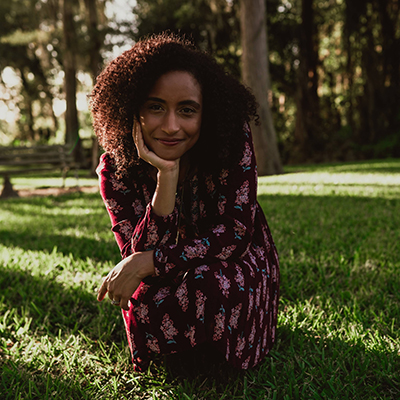
Quina Aragon
Quina Aragon is an author, editor, and spoken word poet residing in Orlando, Florida, with her
husband and daughter. Her three children’s books—Love Made, Love Gave, and Love
Can—poetically communicate the Bible’s storyline through a Trinitarian lens of love. Quina has
also contributed chapters to numerous books and has written scripts for two short films. She’s
had the privilege of working with Christianity Today, The Gospel Coalition, Risen Motherhood,
She Reads Truth, Harvest House Publishers, and many more. You can find her on Instagram
@Quina_Aragon and at her website QuinaAragon.com.
Episode Transcript
FamilyLife Today® with Dave and Ann Wilson – Web Version Transcript
This content has been generated by an artificial intelligence language model. While we strive for accuracy and quality, please note that the information provided will most likely not be entirely error-free or up-to-date. We recommend independently verifying the content with the originally-released audio. This transcript is provided for your personal use and general information purposes only. References to conferences, resources, or other special promotions may be obsolete. We do not assume any responsibility or liability for the use or interpretation of this content.
God Can Use Your Story (Even the Pain): Quina Aragon
Guest:Quina Aragon
From the series:God Can Use Your Story (Even the Pain): Quina Aragon
(Day 1 of 3)
Air date:August 10, 2026
Dave (00:04):
What is the one thing that always makes me cry, makes me tear up?
Ann (00:09):
Well, you cry at every single movie you see.
Dave (00:12):
Every movie.
Ann (00:13):
So I would say “a good story.”
Dave (00:15):
Yeah. I mean, that’s it. If I’m at church, and there’s an emotional moment—video, worship, hands raised, singing my heart out—that’s emotional. But when somebody walks up and tells their story, I don’t know what it is. I’m over there sobbing most of the time.
Ann:
Yeah.
Dave:
You love that, huh?
Ann (00:32):
I love that you do that because you don’t do it every day, like in normal life. So there’s something that’s maybe there. But I think all of us, a good story is compelling. It draws us in.
Dave (00:51):
Welcome to FamilyLife Today, where we want to help you pursue the relationships that matter most. I’m Dave Wilson.
Ann (00:57):
And I’m Ann Wilson. You can find us at FamilyLifeToday.com. This is FamilyLife Today.
Dave (01:10):
So today is story day. We’ve got Quina Aragon with us, a spoken word poet, an author, a speaker, a wife, a mom, and we’re going to get to hear your story. So Quina, welcome.
Quina (01:23):
Thank you for having me. I’m so excited to be here, and I’m a sucker for stories as well.
Dave:
Are you?
Quina:
Oh yeah.
Ann (01:29):
Well, you create stories with your words.
Quina (01:31):
Yeah. That’s what I want to do.
Dave (01:33):
Can you tell us your whole life story in a spoken word? You just make it up on the spot?
Quina (01:38):
All right, “Back in 1989—” No, I wish I could. I wish I could.
Dave (01:41):
A lot of your spoken word though is your life story, I’m guessing.
Quina (01:45):
Yeah. A lot of it just comes out of wherever I’m at in life, and just actually, honestly, writing poetry and spoken word pieces came after I came to know the Lord.
Ann:
Oh.
Dave:
Really?
Quina:
So I’ve always seen it as truly, like a gift from God that I want to use for His glory in whatever capacity I can write creatively. I’ve always enjoyed writing in general, but it was always very academic and class presentations and things like that. But when I was 16, a friend on my volleyball team shared the gospel with me and I saw later on as she and her mom were kind of tag teaming, discipling me in that first year. I saw her older sisters do a spoken word piece to honor their mom. And I was like, “Huh, that’s cool.” I mean, I’ve always liked hip hop, but I’ve never really tried to write like that.
Ann (02:33):
Are you artistic?
Quina (02:34):
I never really was. I was an athlete so that was it. It was school and sports and that’s it. And actually, the girl who shared the gospel with me later was like, “I remember you used to be terrible at poetry.” When we did the poetry segment in 10th grade or whatever it was, she was like, “Yeah, your poems were not good.” So like I said, after I came to know the Lord, I just would write in my journal and it would kind of come out as poetry, just whatever I was processing in life.
Dave (03:01):
Wow.
Quina (03:02):
And I was processing as I was learning about God. Then English teacher caught wind of that. And she was like, “You’re going to be a part of this poetry slam that I’m putting together.” It was a big, big public high school here in Orlando. She said, “You need to memorize a poem and perform it.” And that was kind of my first getting on stage and performing a memorized poem. And it was in front of multiple classes of like 300 at a time, 300 students at a time. And I just remember a lot of my peers coming up to me after teary-eyed and saying how it touched them or how they had never really thought about God like that. I immediately, of course, I’m like wow, this could be really a—maybe I didn’t have the language for it, but a ministry in itself, ministry of words, a ministry of storytelling.
Dave (03:51):
Tell us your story.
Quina (03:53):
Wow. Okay. So 1989, I was born in Manila, the Philippines. My mom is half Filipino/half Puerto Rican. My dad’s Jamaican. I have an older sister. She was four years old when I was born. So my real name is Iva Quihana Valenciano Parchment, but in very Filipino fashion, everyone just calls me Quina. So I was born in the Philippines and then moved as a baby back here to Orlando and grew up here. And I grew up pretty Catholic background, and I really didn’t have any interest in God. It was in middle school maybe that I started to ask the nuns questions. I was the annoying student that’s like, “Excuse me, how do we know what Muslims believe isn’t true? How can we really believe the virgin birth?” I just had questions like that. But yeah, the answer I would get back a lot was just have faith, but there really wasn’t much of an object to my faith.
(04:50):
There wasn’t really this study or love for scripture. I didn’t know much about it. And so I went into high school—I went from this small, little Catholic school where I’m one of the only black kids there; experience racism, experience all this stuff. But I found this identity and sense of belonging through sports. So going into high school, I was asked to play basketball for one of the public high schools here. And so that was going to be my focus, and it was my focus: basketball and then volleyball and experienced in, I believe it was 10th grade, just this sense of “What’s the point?” At that point, in a high school way, I had it all. My family was fairly well off at the time, and I had the boyfriend, I had the popularity, I had done well in sports, done well in schools. I felt like very Ecclesiastes, like, “All right, I have all these things. Now what? It’s meaningless. Feels like chasing after the wind.” So I started to, very just to myself, kind of grapple with some of those questions. What’s this all for? What’s the point?
(05:56):
If you’re smart, you die. If you’re not so smart, you die. If you’re rich, you die. If you’re poor, you die.
Dave (06:01):
So you had those kinds of thoughts in 10th grade?
Ann (06:06):
I did too. That’s very similar to my story and age even. But I remember being in bed thinking, “Why am I here? What’s the point?”
Quina (06:12):
Yeah. Always felt very empty despite all the good things God had blessed us with. So I had a friend in my English class who was a track star. I admired her, of course, because she was another athlete and she was very smart. But what I noticed was even though she was very approachable, she wasn’t cursing people out like we were. She wasn’t gossiping like we were. She wasn’t doing the same things. I just took note of that and eventually she ended up being my best hitter on my volleyball team. I was a setter. So of course, I liked her for that because she got us all the points. And I started to spend more time with her outside of practice, go to her house, and their family, they were believers. They didn’t kind of thump me over the head with the Bible or anything, but they were just very welcoming.
(07:03):
So I always say it was really their hospitality that drew me in, just the sense that I could feel grace and warmth, the way they interacted with each other, just all things I noticed. I’m like, “Wow, they’re different.”
(07:15):
I think it was after prom or homecoming, one of the—I think it was either junior year or sophomore year—I remember talking to that friend. I slept over, and I saw a Bible verse on her wall that she had printed out. I don’t know if people still do that, where they print out Bible verses, just throw it on their walls.
Dave:
Yeah, they do. We’ve done it.
Quina:
Yeah. It was like the oddest Bible verse to have on your wall, but it was from the book of James, and it said, “So you believe there’s one God. Good! Even the demons believe that and tremble.”
Dave:
That’s what they had?
Quina:
She had that. But honestly, the Lord used that because I was like, I would’ve said at that time, “I’m Christian. Yeah, yeah, yeah. I’m good. I’m a good person. I have morals.” And of course, at that time, I was also seeing my sins snowball.
(07:55):
So as much as my parents tried to raise me with morals, in high school, I got exposed to so many things. I got enslaved to sexual sin, all kinds of stuff. So I saw that verse and I was like, “Huh? What does that mean?”
Dave (08:07):
So God really used that. That’s awesome.
Quina (08:10):
Yeah. And she shared just that you can have a relationship with God. I’d never heard that language before. She just, more so, shared story at first. She didn’t necessarily share the full, okay, this is what Jesus did, but just that you can have a relationship. It’s possible. And of course, I thought about that later. And I remember one providential night, I was in my room, wrestling with those same questions: why am I here? I think I was stressed about something, maybe volleyball. And it led to this just breakdown. I finally had an emotional breakdown. So I didn’t used to cry. I was very avoidant with my feelings, just suppress, suppress, suppress. I’m tough. I don’t have issues. I was in my room and just had a breakdown. And I have an aunt and uncle who’s my Ninang and Ninong, which is like your godmother, godfather in the Philippines, who are believers.
(09:02):
And they would send me a Bible all the time as a gift. So I had Bibles in my room. I just never read them. They were just dusty. And so that day, that night, I opened up one of the Bibles they sent me, not really knowing even how to read Scripture or what it’s about. I just opened it to the middle, which happened to be the Psalms. And it was Psalm 69. And all I remember, of course, it’s poetry, and all I remember was just seeing the type of emotional language.
(09:26):
I thought the Bible was “Thou,” “Thy,” old King James language that I couldn’t understand. And I thought it was all commands. So to see a poem, where the poet is like, “Save me. I’m drowning. I have more enemies than hair on my head. Rescue me with your sure salvation,” these types of words, I was like, “Wow!” Something drew me to that.
Ann (09:52):
I want to read that.
Quina (09:53):
Oh yeah, go ahead.
Ann (09:54):
Let’s read part of it.
Quina (09:55):
Yeah.
Ann (09:56):
Maybe you should read it because you’re good at that. I like hearing your voice when you do it.
Quina (10:00):
Yeah.
Ann (10:00):
That whole beginning is, “I’m exhausted from crying for help. My throat’s parched.”
Quina (10:05):
And that’s exactly where I was at.
Ann (10:06):
Really?
Quina (10:07):
Yeah. So this is—I don’t even know what version I was reading, but this is ESV. This is what blew me away was the beginning. “Save me, O God, for the waters have come up to my neck. I sink in deep mire, where there is no foothold. I have come into deep waters, and the flood sweeps over me.” Oof, you guys, I may cry. See
Ann:
I know.
Quina:
I’m about to cry now, just remembering that. “I’m weary with my crying out. My throat is parched; my eyes grow dim with waiting for my God. More number than the hairs of my head are those who hate me without cause. Mighty are those who would destroy me; those who would attack me with lies.” And down to verse five, “O God, You know my folly; the wrongs that I’ve done are not hidden from You.” And verse six, “Let not those who hope in You be put to shame through me, O Lord God of Hosts.
(11:01):
Let not those who seek You be brought to dishonor through me.”
Dave (11:07):
I mean, are you remembering that night?
Quina (11:08):
Yeah, I am. I am, but I’m also thinking, “Wow, how relevant those words have been to me now,“ 20 or so years later of walking with the Lord.
Ann (11:19):
And how sweet of Him to take you to that Scripture that just sunk and pierced your heart.
Quina:
It did.
Ann:
What did you feel? This is a God that, what?
Quina (11:29):
That allows me to feel. I didn’t allow myself to feel. And I would say, in some ways in my childhood, I wasn’t allowed to feel. I wasn’t allowed to express anger. I wasn’t allowed to express those things. Maybe not explicitly, “Hey, you’re not allowed to have those things,” but implicitly, those were things that I didn’t know that I could safely express. And here I opened the Bible, and it’s words like that. I’m like, “Wait a minute. You’re allowed to talk like that? “That’s how I feel.”
Ann (11:59):
Yeah.
Dave:
I mean, it’s so beautiful, as I hear your story, to think, number one, God used a family. This mom and dad, your friend.
Ann (12:08):
Their hospitality.
Quina (12:09):
Yeah.
Dave:
You being in their home. And I think often we, as families, especially Christian families—I’m sure our listeners—are like, “God’s not going to use us.” No, when you have people in your home, or in your neighborhood, it’s powerful. You watch them. You watched the way they talk; you watched how she lived at school, and you notice there’s something different. And then, God uses art through Scripture that connects to you. I came to Christ at a music concert, and I’m a musician. And Ann said to me the other day, she goes, “Isn’t that interesting that God would use music, and it hit your soul different than a preacher?” And I’m like, “Huh.” And yours was the Word of God, but through poetry in the Word of God. That’s just pretty cool how God works.
Ann (12:49):
I love how He woos us.
Quina (12:51):
Yeah, exactly.
Dave:
You’re both crying in here. I should have started crying, I guess.
Quina:
I know. First five minutes. Come on guys, help me out. I’m trying to make it through the interview.
Dave (13:04):
I mean, you’re alone in your bedroom.
Quina (13:06):
Alone, by myself.
Dave (13:07):
Dusty Bible, open it up, boom.
Quina (13:09):
Yeah, I didn’t know how to pray. I just knew I was crying and I was reading that. Then I was like, “I should probably ask my friend about this stuff because she seems to know about it.” So I was too shy to talk to her because I feel like I’ve never been great on my feet to just have a conversation or to say certain things.
Dave (13:28):
You’re a spoken word artist. You’re not good on your feet?
Quina (13:31):
Those are memorized. That’s different.
Dave (13:32):
Oh really, so you still feel that way?
Quina (13:34):
I do. Yeah, I prefer the comfort of thinking through, writing it and then, “Okay, now I know what I want to say.”
Dave (13:40):
So you wanted to talk to her, but you were afraid.
Quina (13:42):
I wanted to talk to her. Even though she was very friendly, I was still a little afraid to ask her about these things. It felt very intimate. So I wrote a letter, very long-winded. And that’s also very on brand for me; but very long-winded letter, essentially just saying, “Hey, I don’t know what’s going on, but can you maybe just explain more of this God stuff to me?” I know I used the word repent wrong. I used all kinds of—I just tried to grab words that I maybe had heard before.
Dave:
What do you mean, “I used the word repent wrong”?
Quina:
I was like, “I don’t think I have enough repent.”
Dave:
That’s awesome.
Quina:
Because I found the letter years later. I don’t know where it is now, but I read it and I was like, “What?” Anyways, she knew what I was trying to say. I was nervous to give it to her.
(14:22):
I gave it to her. And I think it was the next day, she had one of those gospel tracks that has little illustrations, and “This is what—”
Ann (14:32):
Probably “The Four Spiritual Laws.”
Quina (14:33):
It was basically that, but it was through the Impact movement, so it was kind of like incorporating also African American history. So I don’t know. It was really special. And we were on the bus on our way to an away game for volleyball.
Ann:
I love this.
Quina:
So she sat next to me on the bus and said, “All right, do you want me to explain this?” And I was like, “Yeah, yeah, yeah, for sure.” She opened it, explained it. And especially coming from a Catholic background, it was that Ephesians 2:8, that “It’s not by works that you’re saved, but by grace, through faith in Christ.” And that was very powerful for me because I was thinking, “Wait, what? I thought I had to work for this.”
Ann (15:15):
Isn’t it crazy? Like, “Wait a minute.”
Quina (15:17):
Yeah. What are you saying? And she even mentioned God becomes your Father. And I was kind of uncomfortable with that. And that kind of goes back to my story with that. And I just remember being very intrigued, but I knew that God had done the work for me, through Jesus. Being a perfectionist and being somebody who felt like I was never good enough, “I’m always going to fail,” and just that type of person, to know that God did that for me, and that He wasn’t expecting me to try to work my way to Him.
(15:46):
He bridged that gap. Just simple truth like that. I was like, “Wow.” And she thought that I was not interested just because I wasn’t talking. I was just really taking it in, so I was very silent. She was thinking like “She’s not—she doesn’t care.” But after the game, I remember I went home. I kept the gospel tract, and I went through it again. And it has a little prayer at the end, and I didn’t know how to pray. So I was like, “Okay, I’ll just read this prayer.” And it was genuine. I asked Christ to save me, and I went to school the next day and I was like, “Cool. So what’s next? I did the prayer thing.” She’s like, “What?!” And I’m just thrown off by her excitement and she’s like, “We’re sisters now.
(16:31):
We’re sisters in Christ.” And I was like, “Okay, cool.” So I didn’t know what anything really meant, but I just knew that there had been a shift and a change in me, and I was hungry. At that point, I just wanted to read the Bible. Then, of course, I’m reading James, I’m reading all these things in the Bible. I’m like, “Oh, this is relevant. How come no one told me this is so relevant?” That’s kind of how it started, and so, you have that honeymoon phase.
Dave (17:01):
I mean, I’ve got tears in my eyes now. It’s picturing this high school volleyball player sitting on a bus with you, having the courage because you showed interest.
(17:10):
I mean, I was thinking that’s something as, we as parents, dream as we raise our kids; that they would know eternal things and know what matters. And I mean, that was one of our goals in raising our three sons is that they would love God and love others. And we called it “make a dent where they’re sent.” Wherever God’s put you, make an impact. And she did.
Quina:
Wow.
Dave:
And you’re now making an impact on the world because a high school girl said, “I’m going to share the gospel on a volleyball bus trip” when nobody else is thinking eternity. Oh, that’s beautiful.
Ann (17:48):
One of the questions we get most often this time of year is what study should we do with our small group?
Dave (17:53):
I thought you were going to say, “Who’s going to win the Super Bowl?”
Ann:
No, I was going to say that.
(17:57):
And honestly, if you haven’t done the new Art of Marriage and I said it’s a new Art of Marriage.
Dave (18:03):
Yes. It’s been like refreshed and redone and it is awesome.
Ann (18:08):
You should do it. Give it a shot.
Dave (18:09):
Yeah, you can do the Art of Marriage. And if you want, maybe you want to do a parenting study. We have the Art of Parenting or Vertical Marriage. They’re all video studies and workbooks and they’re on sale right now through the end of August. 25% off. That’s a deal. I like sales.
Ann (18:25):
Me too.
Dave (18:25):
So go to FamilyLife.com/shop. Pick out whichever small group study you want to do and go watch God work in your life. And even more importantly, in the lives of those that you’re leading. FamilyLife.com/shop.
I got to ask you this though. What about the father thing?
Ann (18:46):
Yeah, that you referred to.
Quina (18:48):
There’s a lot of things I’m working through in trauma therapy right now that I’m still trying to put words to and articulate what my childhood experience was, but I would just say it was a bit rocky. That’s probably putting it lightly. It was tough. And so I have complex PTSD. I was just recently diagnosed with that. And so I do still get into—even though my dad and I have a great relationship now, I still get into these fight or flight moments where I get triggered by something or frozen. I could feel frozen or want to run away from stuff. And when I heard that God could be my Father, it was like these complex feelings that I had like, “I want that.” Also, “What does that mean? What does that come with?” And so I would say a lot of my journey of learning who God is, is learning to not project the shortcomings of my father onto God.
(19:45):
And also learning that my story didn’t start with me being born.
(19:52):
It even started before that with my dad’s trauma and his story. He has had wounds and my mom, too; and their parents. There’s intergenerational, but then the story doesn’t even start with that. It goes all the way back to the Garden. And then, it doesn’t even start with Adam and Eve. It actually goes before that, which is what my books are about, which is that before anything you were loved. And my journey, I think, as a believer, has been trying to grow in that reality, that I may know intellectually, but that practically or emotionally, mentally, it can be a hard thing for me to really accept or to really soak in and enjoy at times.
Dave (20:38):
I mean, you’re not alone.
Ann (20:40):
I think that was my greatest struggle, even when we went to seminary. I know God loves me. I know the Scripture says that. I know it analytically, but sometimes I can’t get it down into my heart to experience it and to feel His great love.
Quina (20:55):
Yes.
Ann (20:55):
And it’s taken years to be able to figure that out. I love that you’re wrestling with it.
Dave (21:00):
Yeah. It’s great that you’re in your 30s and you’re wrestling with this. I don’t think I even started to wrestle with my dad wound. Because when I heard the same thing, that God can be your Father, I was like, “That’s not a good thing.” My dad was an alcoholic, abuser, gone. So my first thought was, “Oh, so he’ll leave me like my dad did.” I had to wrestle through, “No, that’s not the heavenly Father. He’s the perfect Father.” So what you’re wrestling through, I think a lot of our listeners are going, “I’m there now.” Even your children’s books, as I read through them, I’m like, “Wow, these are great. These are for kids, but they’re for adults as well,” because we need to understand that we’re made out of love, and that love comes from the Father.
Ann (21:42):
Yeah. It’s beautiful.
Dave (21:43):
I mean, as you think through—I mean, we’ve heard all the way up to you coming to Christ. What would you say, because we don’t have a lot of time left, is the biggest difference He’s made in your life?
Quina (21:55):
Come on, man.
Dave:
Well, give me ten.
Quina:
I need another hour. I need another hour. Oh man, the biggest difference—
Dave (22:01):
You’ve only got one thing.
Quina (22:02):
—has been story.
Dave:
Story?
Quina:
To go back to the beginning.
Dave (22:06):
What do you mean?
Quina (22:07):
I believe story, in so many ways, shapes our identity and our identities. I’m a Filipino, I’m a Puerto Rican. The stories of, for example, the Taino people in Puerto Rico, that has something to do with me. So I believe story, in so many ways, shapes our identity and that when you look at the story of Scripture—of course, it’s filled with little stories as well, many stories that make up one—and God is never speaking into a vacuum. He’s speaking into a story. He’s speaking into somebody with wounds, with trauma, with preconceived notions of who He is. He’s speaking into a place where it’s just not like an empty slate. It’s not. He knows how to step into the messiness of our stories and the beauty of our stories, and to bring dignity to the Imago Dei that’s in us, to us being made in the image of God, and to redeem that God is a story writer.
(23:01):
He’s a storyteller. He’s the best one, obviously. And He writes with a really good, redemptive arc.
(23:07):
That’s the biggest difference, because in my dark moments, I could see my life as, and even my walk with Christ, past that honeymoon phase that I was just talking about; past that time as just trauma after trauma after trauma. What was the point? Why am I following Jesus? This is hard. I’m experiencing so many things. Or I can look at it as God has been writing this story, and even through the hardships, has been interested in making a new creation out of me that changes me at a deeper level than I could have ever known. I’m certain that I would’ve given up on life itself, at this point in my life, if I did not have the Lord. And a big part of that is understanding that He is writing a story with a beautiful end.
Dave (23:57):
What a great day with Quina Aragon. And again, her books are kids’ books. They’re called Love Made, Love Gave and Love Can. And you get your copies by clicking the link in the show notes at FamilyLifeToday.com. And guess what? We got her back tomorrow, so we’ll see you tomorrow.
Ann (24:13):
Our vision at FamilyLife is every home, a godly home. And we need your help to get there. And when you become a FamilyLife Partner, your monthly support makes that vision actually possible.
Dave (24:26):
So the question is, will you come alongside us and alongside families in need?
Ann (24:30):
And you can go to FamilyLifeToday.com and read more about it and become a partner. Just click the donate button at the top. And again, you can go to FamilyLifeToday.com.
Dave (24:45):
FamilyLife Today is a donor-supported production of FamilyLife®, a Cru® ministry; celebrating 50 years of helping you pursue the relationships that matter most. I
If you’ve benefited from the FamilyLife Today transcripts, would you consider donating today to help defray the costs of producing them and making them available online?
Copyright © 2026 FamilyLife. All rights reserved.
www.FamilyLife.com